 how-to
Best Packing Materials for Long-Term Storage That Actually Protect
Last Updated: November 1, 2026
Quick Summary
The best packing materials for long-term storage are those that resist moisture, hold their shape under weight and do not degrade into the items they protect. Use acid-free tissue paper, bubble wrap and double-wall corrugated boxes, adding silica gel packets and moisture absorbers to control damp. Avoid anything that traps moisture or breaks down chemically.
- Wrap glazed ceramics in acid-free tissue first, then bubble wrap, so plastic never touches the surface.
- Choose double-wall corrugated boxes in uniform sizes and seal every seam with heavy-duty tape.
- Use plastic bins for moisture-sensitive or valuable goods and cardboard for dry textiles and household items.
- Keep boxes off concrete floors on pallets and leave a gap between boxes and walls for airflow.
- Never use wool blankets or feather pillows as packing material, as they attract moths and carpet beetles.
Table of Contents
- Why Long-Term Storage Needs Different Packing Materials
- Essential Packing Materials for Long-Term Storage
- The Best Boxes for Long-Term Storage
- Plastic or Cardboard Boxes for Storage: Which Holds Up?
- Packing Fragile Items for Storage Without Breakages
- How to Pack Clothes for Long-Term Storage
- Controlling Moisture and Climate in Your Storage Unit
- Labelling, Inventory and Keeping Pests Out
- Common Packing Mistakes That Ruin Stored Belongings
- Planning Your Packing with Fletcher Removals and Storage
- Frequently Asked Questions
Why Long-Term Storage Needs Different Packing Materials
Cardboard that survives a two-hour van journey can fail badly after eight months in a container. That is the core problem with long-term storage, and it is why the best packing materials for long term storage are not simply the strongest ones on the shelf. They are the ones that keep working when nothing is watching: when humidity rises in October, when a box sits at the bottom of a stack for a year, when mice find the gap under the door.
The pattern is consistent: short moves and long storage both expose poor packing. Short moves punish poor packing with a cracked plate. Long storage punishes it with a collapsed box, musty clothing and a wardrobe that will not close properly again. The failure is slow, which makes it easy to miss until the damage is done.
Below, we break down which materials genuinely hold up, which are a waste of money, and how to combine them so your belongings come out the way they went in. The materials we recommend fall into four jobs: cushioning, moisture control, structural support and pest deterrence. Get all four right and storage becomes boring, which is exactly what you want.
Essential Packing Materials for Long-Term Storage
The best packing materials for long-term storage are those that resist moisture, hold their shape under weight and do not degrade into the items they are meant to protect. Anything that traps damp or breaks down chemically should stay out of the box.
A common mistake is buying one type of material and using it for everything. Bubble wrap is excellent for a lamp base and useless for a wool coat, which needs to breathe. Below, we split the essentials by the job they actually do.
Cushioning and Wrapping Materials
Cushioning absorbs knocks and stops items rubbing against each other. For storage, the material also has to survive months of static pressure without flattening.
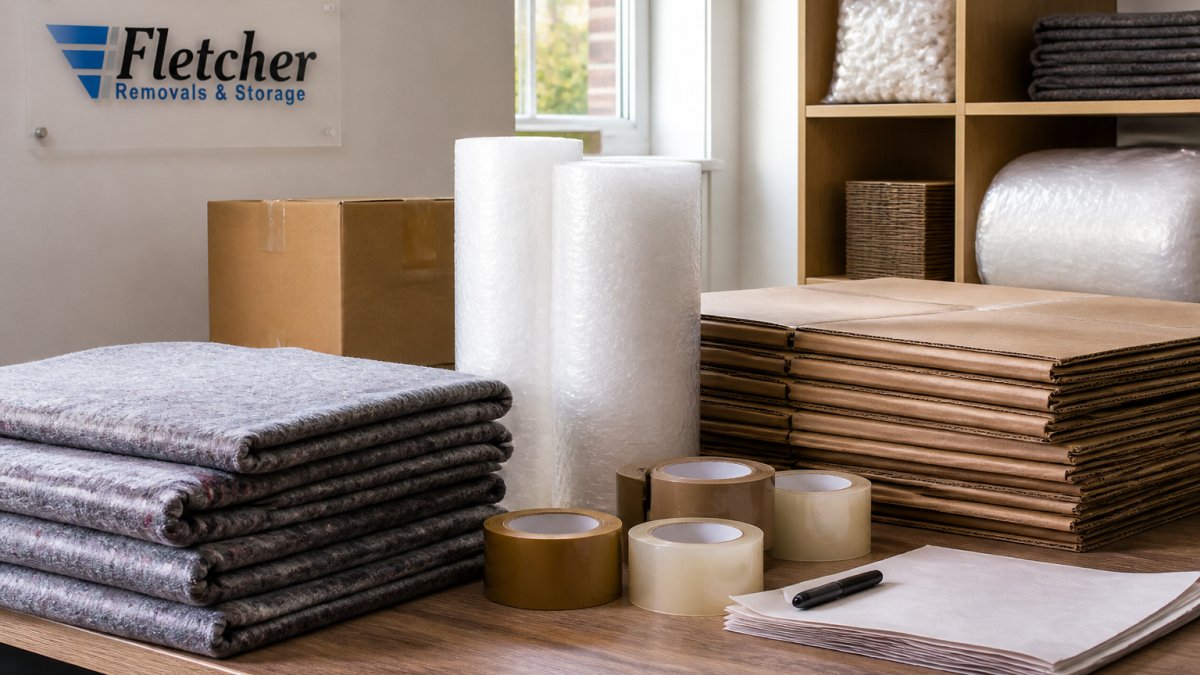
- Acid-free tissue paper for ceramics, glassware, photographs and textiles. Ordinary newspaper leaves ink marks and turns acidic over time, which stains and weakens fabric.
- Bubble wrap for rigid, unglazed items and furniture corners. Wrap glazed ceramics in tissue first, then bubble wrap, so the plastic never sits directly against the surface.
- Corrugated cardboard inserts and protective padding to fill gaps and stop movement inside the box.
- Packing peanuts for lightweight, awkward shapes. They settle over time, so top up boxes before sealing.
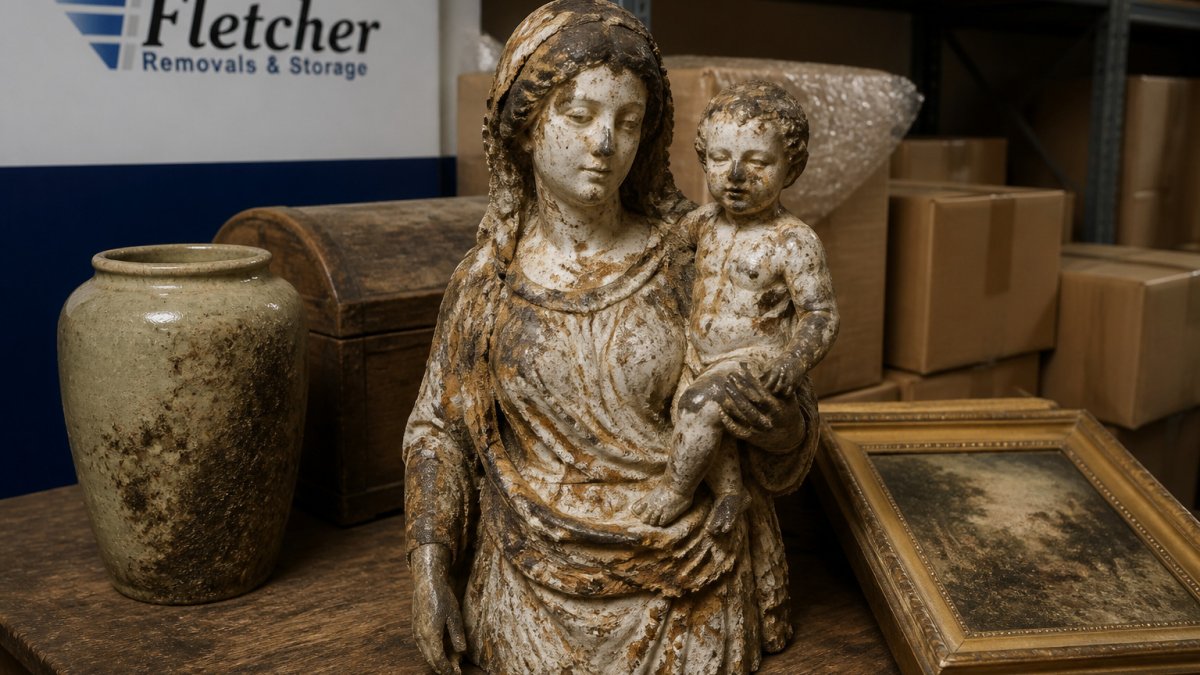
Watch out: never let bubble wrap touch oil paintings, leather or anything with a fragile surface finish. Plastic can bond to some coatings over months, and the mark will not come out.
Moisture Absorbers and Desiccants
Moisture is the single biggest threat to stored goods, and it is invisible until mould appears. Silica gel packets and moisture absorbers pull water vapour out of the air inside a sealed box or container.
Use them deliberately, placing moisture absorbers in sealed boxes and in the storage space, and check them on a regular schedule.
The Best Boxes for Long-Term Storage
The best boxes for long-term storage are double-walled corrugated cardboard boxes, sized so they can be lifted safely when full. If you are packing bulky items, our step-by-step guide to packing furniture for storage shows you how to do it properly. Single-wall boxes crush under stacking weight, and oversized boxes become too heavy to move without splitting. Buy new boxes rather than used ones, because used boxes may have lost stiffness.
Three rules cover most purchases:
- Double-wall corrugated cardboard for anything heavy, such as books, tools and kitchenware.
- Uniform box sizes so they stack with stacking stability instead of toppling.
- Reinforced bases with heavy-duty tape along every seam, not just the middle.
Plastic or Cardboard Boxes for Storage: Which Holds Up?
Plastic storage bins win on damp resistance and pest proofing. Cardboard wins on cost, breathability and stackability. The right answer depends on what is going inside, but the decision is more technical than most guides admit, because certain plastics and cardboard linings can chemically interact with stored items over years.
| Feature | Plastic storage bins | Corrugated cardboard boxes |
|---|---|---|
| Moisture resistance | High, especially with airtight lids | Low unless lined and sealed |
| Breathability | None, traps damp if contents are not dry | Good, lets textiles settle |
| Pest resistance | Strong against rodents | Weak without deterrents |
| Stacking strength | Good when lids are rigid | Good when double-walled and uniform |
| Cost | Higher upfront, reusable | Lower, but replaced more often |
| Chemical compatibility | Some plastics off-gas and can discolour or embrittle contents | Acidic lignin in standard cardboard can stain textiles and paper |
| Best for | Photos, electronics, garage goods | Clothes, books, household items |
Use plastic for anything moisture-sensitive or valuable, and cardboard for textiles and general household goods that are fully dry. A mixed approach is normal and sensible. Just do not seal damp clothing inside an airtight container, because you have created a greenhouse.
Different materials suit different items: if you are storing oil paintings, vintage wood or anything with a delicate finish, wrap them in acid-free tissue before placing them in any plastic bin or bag. For anything archival, such as photographs and documents, use acid-free boxes.
Packing Fragile Items for Storage Without Breakages
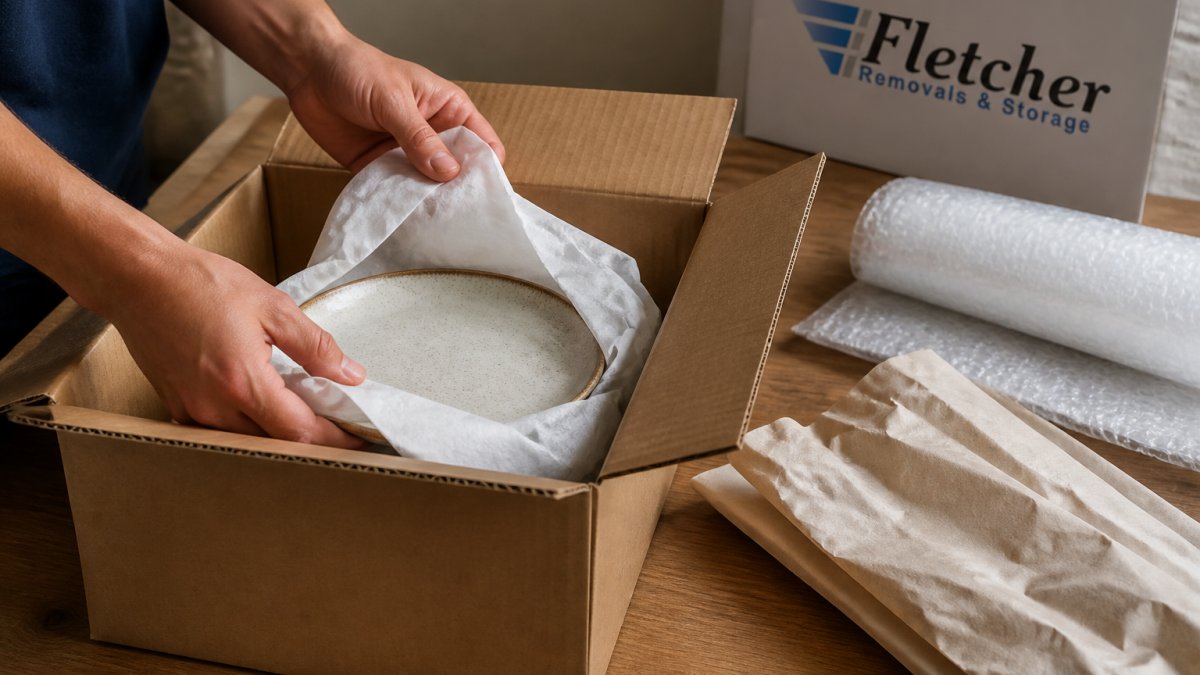
Packing fragile items for storage means wrapping each piece individually, filling every gap so nothing shifts, and labelling the box clearly. Movement causes most breakages in storage, not impact. A plate that can rattle will eventually rattle itself into a chip.
Work through it in this order:
- Wrap each item in acid-free tissue paper, then a layer of bubble wrap.
- Stand plates on edge, never flat, and never stack them directly.
- Fill voids with crushed packing paper so contents cannot move when the box is tilted.
- Mark the box FRAGILE on all four sides with fragile packing tape.
- Keep very high-value pieces in their own box, not mixed with general goods.
How to Pack Clothes for Long-Term Storage
Clothes need to breathe, stay dry and avoid creasing under weight. Clean everything before it goes into storage, because invisible food or sweat marks attract pests and set into stains over months.
Follow these steps:
- Wash and fully dry every item. Damp wool is a mould magnet.
- Use breathable covers, not sealed plastic bags, for suits and dresses. Polyethylene furniture covers work for larger pieces but should not seal in moisture.
- Fold rather than hang heavy knits, which stretch on a hanger over time.
- Add silica gel packets to each box and refresh them periodically.
- Avoid vacuum seal bags for anything delicate or natural-fibre; the compression creases wool and feathers permanently.
Label each box by room and contents so you are not opening six boxes to find the winter coats.
Controlling Moisture and Climate in Your Storage Unit
Climate control matters more than any single material. A unit that swings between cold and warm pulls moisture in and out of your belongings all year. Climate-controlled storage keeps temperature and humidity steadier, which is what moisture-sensitive items such as photographs, instruments, electronics and wooden furniture need.
Practical measures that make a real difference:
- Keep boxes off the floor on pallets or shelving, never directly on concrete.
- Leave a gap between boxes and the walls so air can move.
- Place moisture absorbers in the unit and check them monthly.
- Store furniture under breathable covers rather than shrink wrap, which traps condensation.
A note on materials: some plastics and foams release gases over time that can discolour nearby items, which is why archival quality tissue and boxes matter for anything you care about keeping.
Labelling, Inventory and Keeping Pests Out
A labelling system saves hours and prevents pest problems from going unnoticed. Number every box, photograph the contents before sealing, and keep a simple list of box number, room and contents. Our guide on how to label moving boxes effectively walks you through it in seven simple steps. Digital inventory management can help here: a shared spreadsheet or a note on your phone lets anyone find an item without opening boxes.
Pest prevention matters over months. Avoid wool blankets, feather pillows and natural-fibre rugs as packing materials or padding, as they can attract moths and carpet beetles. Check packing fill labels and choose non-edible options if pests are a concern.
A common pattern is that pests enter through gaps under doors or around pipework, then nest in the nearest soft material. Seal gaps where pests can enter, and check the unit for droppings or gnaw marks on each visit.
Common Packing Mistakes That Ruin Stored Belongings
Most long-term storage damage traces back to a handful of avoidable errors. The most common is packing items that were not fully dry, which turns a sealed box into a mould incubator. The second is overloading boxes until the base gives way under stacking weight.
The others we see regularly:
- Using old, single-wall boxes that have already lost strength.
- Sealing textiles in airtight plastic with no desiccant.
- Skipping labels, then opening every box to find one item.
- Placing heavy boxes on top of light ones.
- Storing furniture without covers, then finding dust ground into upholstery.
- Forgetting to check moisture absorbers after the first month.
None of these are expensive to fix. They are simply easy to overlook when you are tired at the end of a move.
Planning Your Packing with Fletcher Removals and Storage
Good packing starts with a plan, not a trip to the shop. Work out what you are storing, how long for, and what unit size you need before you buy a single box. If you are unsure, our guide to calculating the storage unit size you need helps you work it out before booking. Our guide to organising a storage unit effectively covers how to plan the space itself.
At Fletcher Removals and Storage, we can handle the packing, furniture dismantling and storage, so you do not have to do it alone. Our trained, uniformed staff handle packing, and we offer onsite warehouse storage in container and self-storage formats. We carry Goods in Transit and Public Liability Insurance, and we price transparently with no hidden fees.
Frequently Asked Questions
Are cardboard boxes suitable for long-term storage?
Standard cardboard boxes weaken in damp conditions and can attract pests over time. For long-term storage, use double-walled corrugated cardboard boxes, and keep them off concrete floors on pallets or shelving. Avoid stacking heavy boxes more than three high, and seal all seams with heavy-duty tape. If your storage unit is prone to humidity, plastic storage bins or polyethylene furniture covers offer better protection for moisture-sensitive items.
Should I use plastic or cardboard boxes for storage?
Both have a place. Plastic storage bins are airtight, resist damp and pests, and stack well, making them ideal for clothes, bedding and anything moisture-sensitive. Cardboard is cheaper, recyclable and better for fragile items because it cushions and breathes. The practical answer is to use plastic for long-term protection and cardboard for items that need airflow or extra padding, such as crockery wrapped in acid-free tissue paper.
How do I protect fragile items in long-term storage?
Wrap each fragile item individually in acid-free tissue paper or bubble wrap, then pack it upright in a double-walled box with cushioning materials filling every gap. Never let items touch each other, and seal the box with fragile packing tape on all sides. Keep heavy items at the bottom and lighter ones on top. For very delicate pieces, add a layer of protective padding between items and avoid vacuum seal bags, which can crush awkward shapes.
How can I prevent damp and mould from damaging stored belongings?
Place silica gel packets or moisture absorbers inside boxes and storage bins, and use breathable covers rather than sealed plastic sheeting on furniture. Keep boxes off the floor and away from external walls. If your unit is not climate-controlled, check belongings every few months and replace desiccants as needed. For long-term preservation of paperwork or fabrics, aim for a dry, ventilated storage unit environment and avoid stacking boxes directly against the door.
Long-term storage rewards preparation and punishes guesswork. If you would rather hand the whole job to people who do it every day, get in touch with Fletcher Removals and Storage for a personalised quote, professional packing, secure onsite storage and a stress-free move from start to finish.