 how-to
How to Organise a Storage Unit Effectively: 2026 Guide
Last Updated: October 22, 2026
Quick Summary
To organise a storage unit effectively, plan on paper before packing a single box: list large items, sort everything into store, donate and bin piles, measure the unit and sketch a floor plan, then book the right size. Pack heavy items at the bottom of sturdy double-wall boxes, stack upward rather than outward, and keep a numbered inventory list and unit map so you can find anything fast.
- Photograph every wall of every room before packing to record what you owned and where it lived.
- Buy proper double-wall cardboard boxes and use smaller boxes for heavy items like books and tools.
- Leave at least 30cm of clearance above the highest stack to keep airflow and allow inspection.
- Place items needed weekly or monthly in the front zone and long-term storage towards the back.
- Label every box on at least two sides with a short description and the box number.
Table of Contents
- Start With a Plan Before You Pack a Single Box
- How to Pack a Storage Unit So Everything Survives the Stay
- How to Maximise Storage Unit Space Without Overcrowding It
- The Best Way to Stack Boxes in Storage
- Build a Storage Unit Inventory List You Will Actually Use
- Arrange the Unit So Everyday Items Stay at the Front
- Label and Map the Unit for Fast Retrieval
- Protect Furniture and Fragile Items Through the Seasons
- How to Organise a Storage Unit Effectively: Common Mistakes to Avoid
- Frequently Asked Questions
Start With a Plan Before You Pack a Single Box
Most storage problems start before the first box is taped shut. If you want to know how to organise a storage unit effectively, the answer begins with a plan, not a van.
A storage unit is a small, fixed space. Every item you put in it costs you floor area, access, and time later. So before you pack anything, decide three things: what goes in, how long it stays, and how often you will need it.
At Fletcher Removals and Storage, we have moved and stored belongings for families and businesses since 2013, and the pattern is always the same. The units that work are the ones planned on paper first.
Here is the planning checklist we would use:
- List every large item (sofa, wardrobe, fridge, desks)
- Sort everything into three piles: store, donate, bin
- Estimate how long you need the unit
- Mark which items you will need within the first month
- Measure the unit and sketch a rough floor plan
- Buy boxes in two or three sizes, not one
- Book the unit size before you start packing
That last point matters more than people think. A unit that is too small forces you to stack badly. A unit that is too large wastes money every month. Sketch it out first, then pack.
How to Pack a Storage Unit So Everything Survives the Stay
Packing for storage is not the same as packing for a move. A move is a few hours in a van. Storage is months in a closed room with changing temperatures.
The single biggest mistake is using weak boxes. Supermarket boxes crush under weight. Buy proper double-wall cardboard boxes, and use smaller boxes for heavy items like books and tools.
Follow this order:
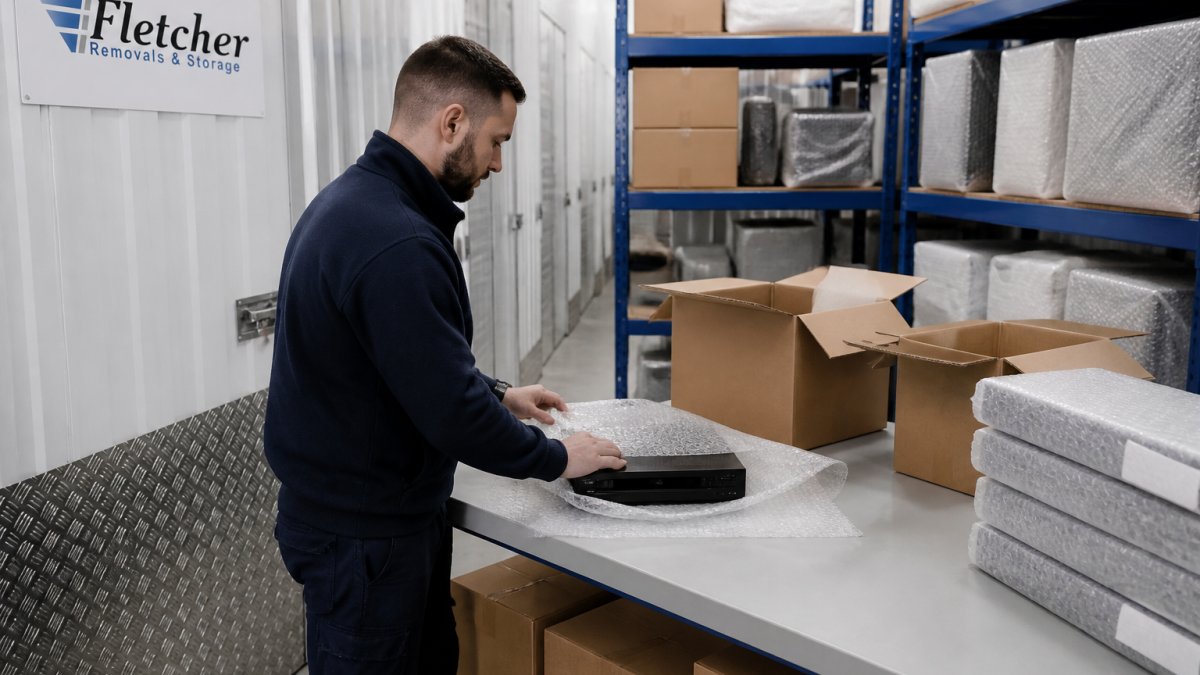
- Wrap first, box second. Bubble wrap or paper on fragile items before they go anywhere near a box.
- Heavy at the bottom of each box. Books flat, not on their spines.
- Fill every gap. Crumpled paper stops items shifting in transit and in storage.
- Tape the seams top and bottom. One strip down the middle is not enough.
- Label every box on the side, not the top. You will stack them, so the top disappears.
Dismantle what you can. Beds, tables, and wardrobes take up far less room flat. Bag the screws and fixings, then tape the bag to the frame so it does not go missing.
For anything fragile or antique, our advice is simple: if you are not confident packing it, let a professional do it. A full packing service exists for exactly this reason.
How to Maximise Storage Unit Space Without Overcrowding It
The best way to maximise storage unit space is to go up, not out. Floor space runs out fast. Height is free.
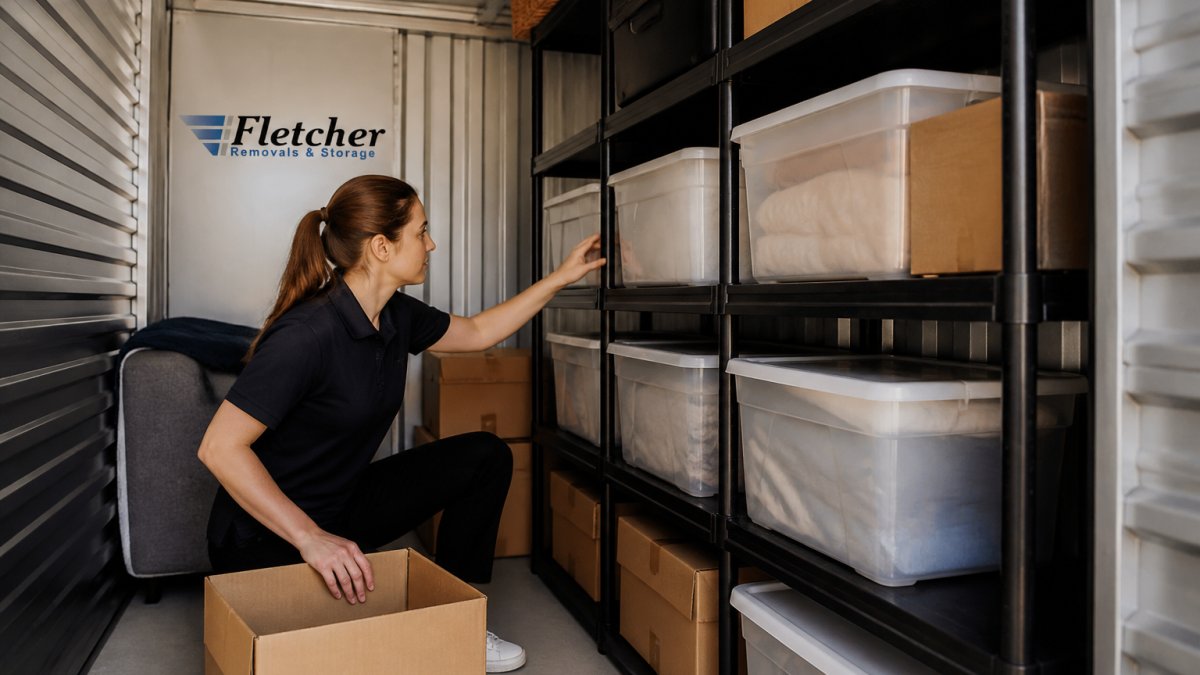
Use tall, sturdy shelving units along the back and side walls. Put rarely used items on the top shelf and everyday items at eye level. Leave a clear walkway down the middle, roughly wide enough to carry a box through.
Here is what actually frees up room:
- Use vertical space with shelving and stacking
- Take furniture apart where it is safe to do so
- Nest items inside each other (boxes inside wardrobes, small pots inside large ones)
- Stand mattresses and sofa cushions on end
- Keep a clear path to the back of the unit
Overcrowding is a real risk. A unit packed to the door is hard to insure, hard to inspect, and hard to empty. Leave a gap between your belongings and the ceiling, and never block the door.
The Best Way to Stack Boxes in Storage
The best way to stack boxes in storage is heavy, large, and sturdy at the bottom, light and small at the top, with every stack built against a wall for support.
Here is the stacking order that works:
| Layer | What goes here | Why |
|---|---|---|
| Bottom | Heavy furniture, large crates, appliances | Takes the weight, stays stable |
| Middle | Medium boxes, books, kitchenware | Easy to reach, well supported |
| Top | Light boxes, soft items, bedding | Safe to lift, no crush risk |
| Front | Items you need soon | Quick access without digging |
Keep stacks no higher than you can safely reach. Align the box edges so the stack sits flat. Never stack boxes in a pyramid shape, as the top ones slide. And do not put heavy boxes on top of soft furniture.
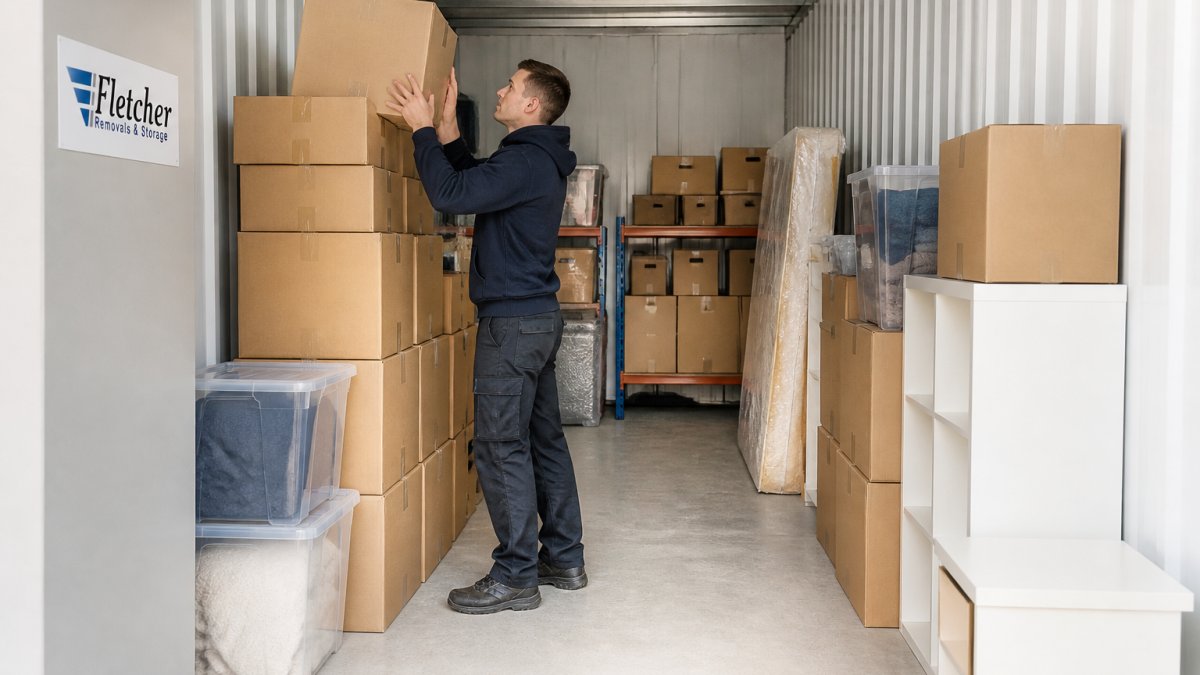
If you are stacking furniture, put the heaviest pieces against the back wall and stack lighter items on top where the surface is flat and strong.
Build a Storage Unit Inventory List You Will Actually Use
A storage unit inventory list is a simple record of what you have stored and where it sits. It only works if it is quick to update, so keep it on your phone, not on paper buried in a box.
Most people start an inventory list and abandon it by box ten. The fix is to number boxes as you seal them, then log the number against a short description. That is it.
Your list should capture:
- Box number
- Room it came from
- Short contents note ("kitchen pans", "winter coats")
- Whether it is fragile
- Which zone of the unit it sits in
A spreadsheet works well. So does a notes app with a photo of each box. The point is speed, not perfection.
This list pays for itself twice. First, when you need something and cannot face opening twenty boxes. Second, if you ever need to make an insurance claim, a clear record of contents makes the process far simpler. Our team can talk you through how goods in transit and public liability insurance work on a move, so you know where you stand.
Arrange the Unit So Everyday Items Stay at the Front
The front of the unit is prime space, and most people waste it. Put the things you need regularly right by the door, and push the once-a-year items to the back.
Think about your first month. What will you need? Seasonal clothes, tools, documents, the kids' bikes, the coffee machine. Those go near the door.
Then work backwards:
- Front zone: items needed weekly or monthly
- Middle zone: items needed a few times a year
- Back zone: long-term storage, seasonal items, sentimental pieces
This is the same logic a good removals team uses when loading a van. The last thing in is the first thing out. In storage, the nearest thing in is the easiest thing out.
If you are between homes for a few weeks, tell your storage provider which boxes you will need early. Flexible access makes a short stay far less stressful, and it means you are not unpacking the whole unit to find a kettle.
Label and Map the Unit for Fast Retrieval
Labelling is the cheapest time you will ever spend. A marker pen and ten minutes now saves an hour of digging later.
Label every box on at least two sides with a short description and the box number. Use a colour code per room if you like: blue for bedroom, red for kitchen, green for garage. Colour makes scanning a stack much faster.
Then draw a simple map of the unit. Sketch the floor plan, mark where each zone sits, and note which box numbers are in each zone. Tape the map inside the unit door, or keep it on your phone.
A good map answers three questions instantly:
- Which zone is this item in?
- What is stacked in front of it?
- What do I need to move to reach it?
Update the map whenever you add or remove something. An out-of-date map is worse than none, because it sends you to the wrong stack with confidence.
Protect Furniture and Fragile Items Through the Seasons
A storage unit is not climate-controlled unless you pay for it, and even then, temperature and damp are the two things that damage belongings over months.
For furniture, the basics work best:
- Clean and dry everything before it goes in. Damp attracts mould.
- Use furniture covers or old sheets, not plastic sheeting, which traps moisture.
- Stand mattresses on end and cover them.
- Remove legs where possible to save space and prevent stress on joints.
- Treat wood and leather before storage if it is going in for a long stretch.
For fragile items, wrap individually, box with padding, and never stack heavy things on top. Mark those boxes FRAGILE on every side.
If you are storing antiques or high-value pieces, ask about secure, insured storage rather than a basic unit. At Fletcher Removals and Storage, we offer onsite warehouse storage, and we would rather advise you on the right option than see a family heirloom damaged.
How to Organise a Storage Unit Effectively: Common Mistakes to Avoid
The mistakes below cause more damage and frustration than anything else. Avoid them and your unit will work for you.
- Packing without a plan. You end up with a unit that is full but useless.
- Using weak or mismatched boxes. Stacks collapse and contents crush.
- No inventory. You lose track of what you own within weeks.
- Blocking the door. You cannot get to anything without unpacking.
- Skipping insurance. If something goes wrong, you carry the full loss.
- Ignoring damp. Mould spreads quietly and ruins furniture and fabrics.
- Overstacking to the ceiling. It cuts airflow and makes the unit unsafe.
The throughline here is simple. Storage rewards planning and punishes rushing. A few hours of prep at the start saves days of frustration later.
If you are unsure whether your belongings need a basic unit or secure warehouse storage, ask. A short conversation now beats a damaged sofa in three months.
Storage always looks simple until you are standing in front of a full unit hunting for one box. The families and businesses we work with avoid that by planning the space, packing properly, and keeping a clear record of what went where.
Fletcher Removals and Storage can take the whole job off your hands, from professional packing and furniture dismantling to secure onsite warehouse storage and insured transport. We have served clients since 2013 with transparent pricing and no hidden fees, so you know exactly what you are paying for.
Get started with Fletcher Removals and Storage and store your belongings with confidence, knowing they are packed, mapped, and protected from day one.
Frequently Asked Questions
How should I arrange items in a storage unit?
Put the items you will need least often at the very back and the ones you will reach for regularly near the door. Place large furniture and heavy appliances along the walls first, then stack boxes in front of them. Keep a clear walkway down the middle so you can get to anything without climbing over other belongings. If you are planning to organise a storage unit effectively, this front-to-back logic is the single most useful habit to build from day one.
What is the best way to stack boxes in storage?
Heavy boxes go on the bottom, lighter ones on top, and nothing should be stacked higher than you can safely lift down. Use same-sized boxes in each stack so the load sits level, and keep stacks against the walls rather than in the middle of the floor. Leave a gap of a few centimetres between stacks for air circulation. Avoid stacking boxes on top of soft furniture, and never put anything on a mattress.
How do I create an inventory of items in storage?
Number every box and write a short list of its contents on a spreadsheet or notebook, noting which room it came from. Photograph each labelled box as you load it, which gives you a visual record if a label falls off. Keep the inventory list somewhere you can access without visiting the unit, such as a phone note or cloud document. Update it whenever you add or remove anything so the record stays accurate.
How can I protect furniture and belongings in a storage unit?
Clean and dry everything before it goes in, since damp attracts mould. Wrap mattresses and upholstered furniture in breathable covers rather than plastic sheeting, which traps moisture. Dismantle beds and tables where possible and bag the screws and fittings to the frame. Stand sofas and mattresses on their ends to save floor space, and keep everything off the floor on pallets or wooden battens. Check whether your provider's insurance covers stored goods and confirm what it does and does not include before you sign.