 how-to
How to Safely Transport House Plants During a Move
Table of Contents
- Why House Plants Need Special Care on Moving Day
- What You'll Need Before You Start Packing Plants
- How to Pack House Plants for Moving: Step-by-Step
- How to Move Large House Plants Without Damage
- Moving House Plants Long Distance: What Changes
- Loading and Securing Plants in the Removal Van
- Unpacking House Plants After Moving: The First 48 Hours
- Common Mistakes to Avoid When Transporting House Plants
- When to Call a Professional Removals Team for Your Plants
- Frequently Asked Questions
Last Updated: October 19, 2026
Why House Plants Need Special Care on Moving Day
House plants are living things, and moving day is the worst day of their lives. They get lifted, tilted, chilled, shaken and shoved into a dark van. Get it wrong and you arrive with cracked pots, snapped stems and leaves everywhere.
Learning how to safely transport house plants during a move comes down to three things: prep, protection and timing. This guide from Fletcher Removals and Storage walks you through each one, step by step.
Here's what most guides miss. Plants suffer more from stress than from distance. A short trip handled badly does more harm than a long trip handled well. So the method matters more than the miles.
What You'll Need Before You Start Packing Plants
Gather your supplies before you touch a single pot. A quick run to the shops on moving morning is the last thing you need.
- Cardboard boxes, sized to fit each pot snugly
- Bubble wrap and old newspaper
- Cling film to hold soil in place
- Packing tape and a marker pen
- Plastic bags for wrapping pots
- A watering can
- Garden twine or soft ties
- A tray or crate for tall plants
Check the Royal Horticultural Society's guidance on moving plants for plant-specific advice if you own anything rare or fussy. Most common house plants follow the same rules.
One insider tip: keep one box open and labelled "plants last, plants first." That box travels in the car with you, not in the van.
How to Pack House Plants for Moving: Step-by-Step
Packing house plants for a move takes two days, not two hours. Rushing this stage is the single biggest cause of damage we see.
Step 1: Prepare Each Plant 48 Hours Before the Move
Stop watering two days before moving day. Wet soil is heavy, and it sloshes out of the pot the moment someone tilts it.
Next, trim dead leaves and long stems. Tie tall stems loosely to a cane so they don't snap. Then check for pests and give the leaves a wipe.
If a plant is too big for its pot, don't repot it now. Repotting stresses roots, and stressed roots don't travel well.
Step 2: Wrap, Box and Secure the Pots
Wrap the pot first, then the plant. Here's the order:
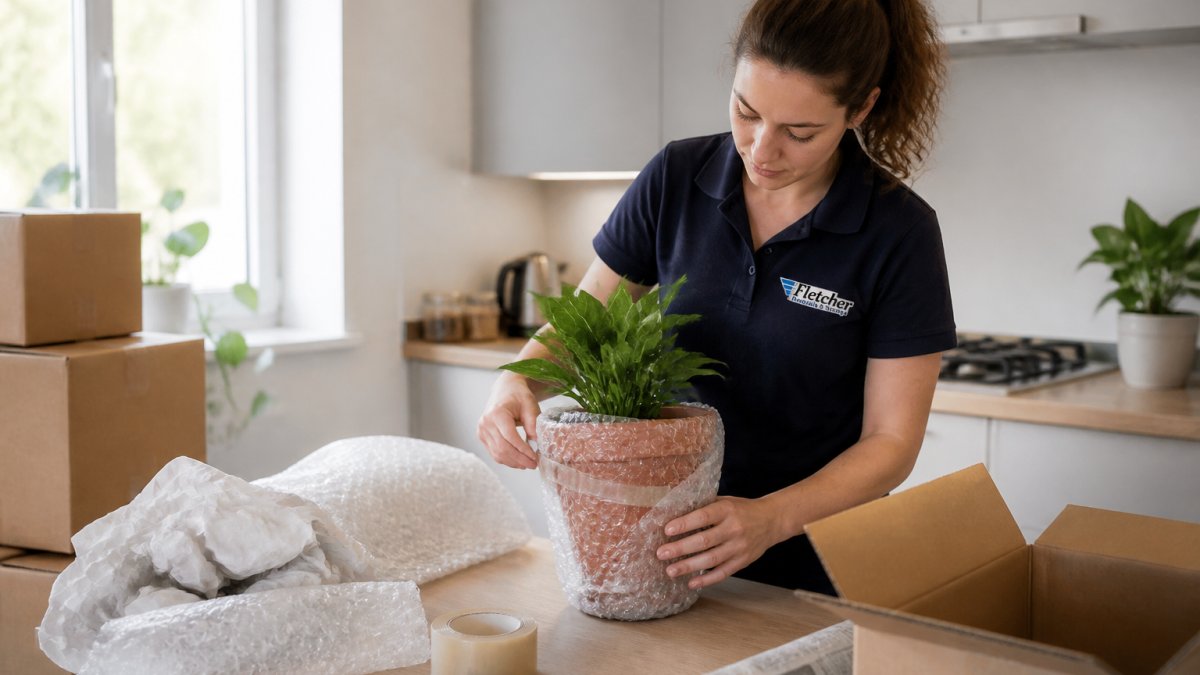
- Lay cling film over the soil surface to stop spills
- Wrap the pot in bubble wrap and tape it
- Wrap the foliage loosely in newspaper or soft paper
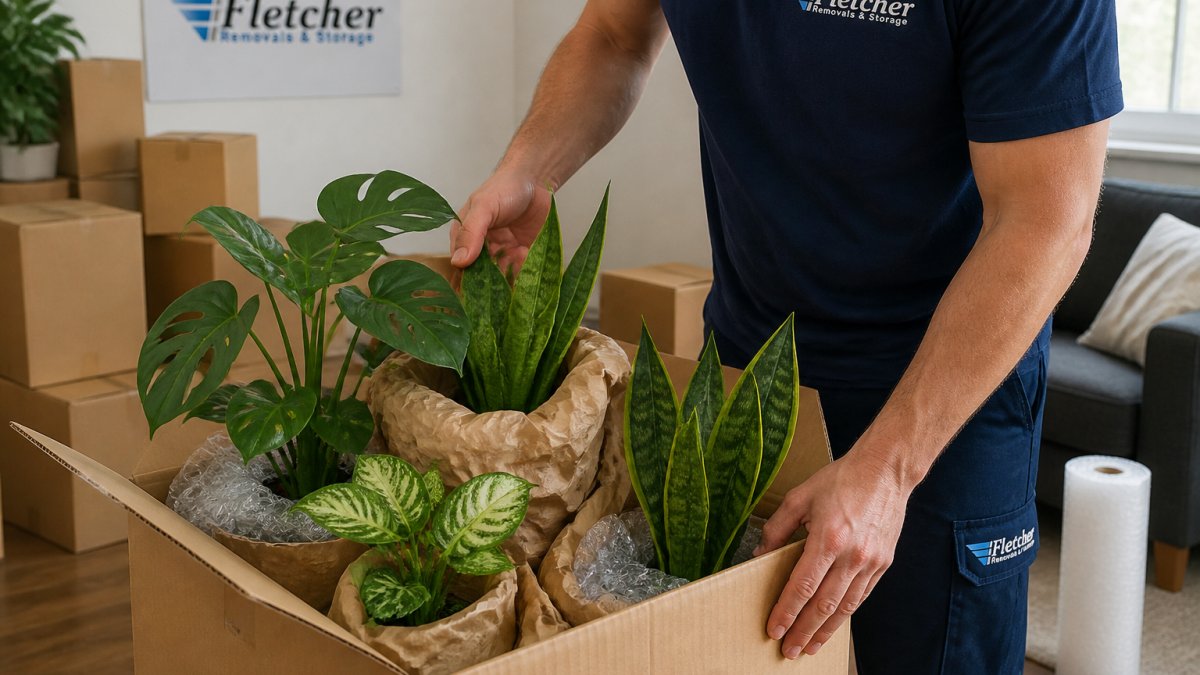
- Place the plant in a box and fill gaps with crumpled paper
- Label the box "LIVE PLANT - THIS WAY UP"
Don't seal plants in airtight boxes. They need air, even in the van.
How to Move Large House Plants Without Damage
Moving large house plants is a two-person job. A tall plant in a heavy pot is awkward, top-heavy and easy to drop.
Start by wrapping the pot in a blanket or old towel and tying it securely. Then wrap twine gently around the stems, pulling the foliage in towards the main trunk. Don't tie tightly. You want support, not strangulation.
Lift from the base of the pot, never from the stem. Carry it upright, and have someone hold doors open ahead of you.
For plants too tall for the van, lay them on their side on a blanket. Slide them in pot-first, and pack soft items around them so they can't roll.
Moving House Plants Long Distance: What Changes
Moving house plants long distance adds temperature and time to the equation. Both matter more than distance itself.
Keep the car cool but not cold. Extreme heat wilts leaves fast, and a freezing van overnight will kill most tropical plants. Never leave plants in a parked car in direct sun.
For trips over a few hours, water lightly the morning of travel, not two days before. A little moisture helps them cope with dry air.
Cover plants with a light sheet in the car. This stops draughts and stops leaves drying out.
If you're using a removals firm for a long-distance move, ask where the plants will travel. Some vans aren't heated, and a winter move needs a plan.
Loading and Securing Plants in the Removal Van
Load plants last and unload them first. That's the rule, and it exists for a reason.
Place plant boxes upright and close to the van walls, where they're least likely to shift. Wedge them with other boxes so they can't slide. Never put plants under heavy furniture or near the doors, where they'll take the first knock.
Keep the van ventilated on warm days. A sealed van in summer turns into an oven within minutes.
Unpacking House Plants After Moving: The First 48 Hours
Unpack plants before you unpack the kettle. The longer they sit in a dark box, the more leaves they drop.
Here's your first-48-hours plan:
- Unwrap everything and check for damage
- Remove cling film and newspaper
- Place plants in bright, indirect light, not full sun
- Wait 24 hours before watering
- Check soil moisture, then water if dry
- Hold off on fertiliser for two weeks
- Watch for leaf drop, which is normal after stress
Some leaf drop in the first week is expected. Don't panic and don't overwater to compensate. Most plants settle within a fortnight.
Common Mistakes to Avoid When Transporting House Plants
The same few mistakes cause most plant damage on moving day. Avoid these and you're ahead of most movers.
- Watering on moving morning. Wet soil spills and adds weight. Stop watering 48 hours before.
- Leaving plants in the van overnight. Temperature swings do real harm. Unload them first.
- Stacking boxes on plants. Crushed stems don't recover. Keep plant boxes on top.
- Sealing boxes shut. Plants need airflow. Leave a gap or a vent hole.
- Putting plants in full sun on arrival. Stressed plants scorch easily. Use indirect light for the first week.
- Skipping the label. An unlabelled box gets treated like any other. Mark it clearly.
When to Call a Professional Removals Team for Your Plants
Most house plants travel fine in your own car. But some situations call for professional help.
Call a removals team if you have a large collection, rare or valuable specimens, or plants too big for a car. The same applies if you're moving long distance, moving in winter, or simply can't face the packing on top of everything else.
Professional movers bring proper boxes, wrapping materials and a van with space to keep plants upright and protected. We pack, protect and load plants with the same care as fragile furniture, and our Goods in Transit and Public Liability Insurance covers your belongings in transit.
Cost depends on the size of the job, the distance and the date. We give transparent quotes with no hidden fees, so you know the price before you commit.
Moving house is stressful enough without losing your favourite fern on the way. The fix is simple: prep early, pack properly, and travel plants upright and last-on, first-off.
If you'd rather hand the whole job to people who do this every day, Fletcher Removals and Storage can help. We offer a full packing service, secure onsite storage for the gap between homes, and trained, uniformed staff who treat your plants like their own. Get in touch with Fletcher Removals and Storage for a quote and move with your greenery intact.
Frequently Asked Questions
How do you pack house plants for moving?
Start by watering plants lightly two days before the move, then wrap each pot in bubble wrap or newspaper and securely it with tape. Place smaller plants in cardboard boxes with crumpled paper around the pots to stop them shifting, and leave the top of the foliage exposed so it can breathe. Tall plants may need a cane for support and a sleeve of horticultural fleece. Label every box clearly as fragile and keep plants upright during loading.
Can house plants travel in a removal van?
Yes, house plants can travel in a removal van as long as they are packed securelyly and the journey is planned carefully. Keep plants upright, away from heavy furniture, and avoid stacking boxes on top of them. In warm weather, crack a window or choose a van with ventilation to prevent overheating. For long journeys, plan a break every few hours to check plants and allow air circulation. Professional removals teams can advise on the best loading position.
How long can house plants stay in a box?
Most house plants can survive in a well-ventilated box for 24 to 48 hours, but no longer. Keep boxes in a cool, shaded spot and avoid sealing them completely. If you need to store plants while between properties, ask about short-term storage with climate control, as extreme heat or cold will damage foliage. Unpack and water plants as soon as you arrive at your new home to reduce stress.
Should you water plants before moving them?
Water plants lightly two days before the move, not on moving day. Wet soil is heavy and more likely to spill, while bone-dry soil stresses roots during transit. A light watering keeps plants hydrated without making pots unstable. For succulents and cacti, skip watering entirely for a week before the move. Always check that pots are not dripping before loading them into the van.