 how-to
How to Calculate Storage Unit Size Needed: 2026 Guide
Table of Contents
- Start With Volume, Not Guesswork
- Measure Your Belongings Room by Room
- Use a Storage Unit Size Calculator (Or Do the Maths Yourself)
- Storage Unit Sizes for House Contents: A Room-by-Room Guide
- How Many Boxes Fit in a Storage Unit
- How to Pack a Storage Unit Efficiently
- Common Mistakes to Avoid
- When to Ask a Professional to Assess the Job
- Frequently Asked Questions
Last Updated: October 17, 2026
Start With Volume, Not Guesswork
Most people guess their storage size and get it wrong. The result is either a cramped unit you can barely walk into or a half-empty one you're overpaying for every month. Learning how to calculate storage unit size needed comes down to one idea: work out volume first, then match it to a unit.
This guide from Fletcher Removals and Storage walks you through the whole process. We've helped households and businesses across Coventry and the wider UK pack, move and store their belongings since 2013, so we know where estimates tend to fall apart.
Here's the good news. You don't need special tools. A tape measure, a notepad and twenty minutes will get you a solid answer.
The Three Numbers That Decide Everything
Every storage estimate rests on three measurements:
- Floor area of the unit, in square metres
- Height of the unit, which is usually around 2.4 metres but varies
- Usable volume, which is floor area multiplied by height
A storage unit size is the advertised floor footprint, but what actually matters is cubic space. A 10 square metre unit with a low ceiling holds far less than one with full head height.
So measure height before you commit. It's the number everyone forgets.
Measure Your Belongings Room by Room
Walk through your home one room at a time and write down what's there. Group items into three types:
- Boxed goods - books, kitchenware, clothes, paperwork
- Furniture - sofas, beds, wardrobes, tables
- Awkward items - bikes, garden tools, ladders, mirrors
For each box, estimate its size in centimetres. A standard removal box is roughly 45 x 35 x 35 cm. Multiply length by width by height, then divide by one million to get cubic metres.
Do the same for furniture, measuring the widest point rather than the neatest. A sofa's true footprint includes its arms and any reclining mechanism.
Add everything up. That total is your starting volume.
Bulky Items That Break the Estimate
Some items wreck an otherwise tidy calculation. Watch for:
- Mattresses, which are wide but thin and awkward to stack
- Wardrobes and tall shelving, which need upright space
- Exercise equipment and ride-on mowers
- Large mirrors and glass table tops, which need protective wrapping and clearance
List these separately. They often force you into the next size up, even when your box count looks small.
Use a Storage Unit Size Calculator (Or Do the Maths Yourself)
A storage unit size calculator is a simple tool that converts your item list into a recommended unit size. Most work by asking what rooms you're storing from, then adding up typical volumes for each.
They're useful as a rough check. They're less useful if your home is unusual, such as a studio flat packed to the rafters or a house with very little furniture.
Doing the maths yourself is more accurate and takes minutes:
- Measure each box and multiply length x width x height
- Divide the result by 1,000,000 for cubic metres
- Repeat for furniture at its widest point
- Total everything and add 15 to 20 per cent
If you'd rather not do it alone, we're happy to talk it through. Our team has sized thousands of storage jobs and can usually spot an overestimate or underestimate in a short conversation.
Storage Unit Sizes for House Contents: A Room-by-Room Guide
The table below shows typical contents for common unit sizes. Treat it as a starting point, not a rule.
| Unit size | Roughly holds | Typical use |
|---|---|---|
| 5 sq m | A studio flat: bed, sofa, boxes, small appliances | Single person, short stay |
| 10 sq m | One-bedroom flat or a few rooms of furniture | Couples, partial house contents |
| 15 sq m | Two-bedroom house contents | Families between homes |
| 20 sq m | Three-bedroom house contents | Larger families, some garage items |
| 30 sq m+ | Four-bedroom house, business stock | Full house clearances, commercial use |
Sizing storage unit sizes for house contents depends on how densely you pack, not just how much you own. A family that keeps every box and a family that declutters first will need very different units.
How Many Boxes Fit in a Storage Unit
Knowing how many boxes fit in a storage unit helps you sanity-check any quote. As a working guide:
- A 5 sq m unit typically takes around 40 to 50 standard boxes plus a few furniture pieces
- A 10 sq m unit handles roughly 100 to 120 boxes
- A 15 sq m unit fits around 180 to 200 boxes
These figures assume floor-to-ceiling stacking with an access aisle. Pack loosely and you'll fit noticeably fewer.
How to Pack a Storage Unit Efficiently
Packing well is the difference between a unit that works and one that fights you. Here's how to pack a storage unit efficiently, in order:
- Start with the floor plan. Sketch where big items will sit before carrying anything in.
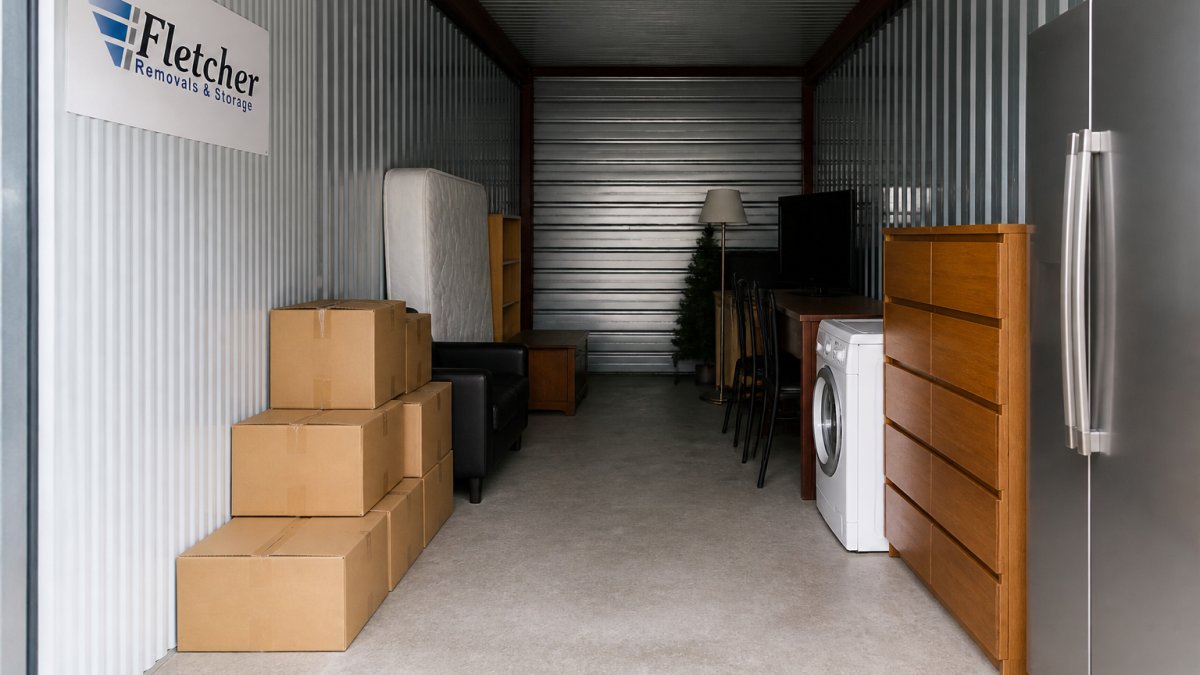
- Put heavy items on the floor. Wardrobes, chests and appliances go at the back and along walls.
- Stack boxes on top, largest at the bottom. Keep box weights under about 15 kg each.
- Stand mattresses and sofas on end where possible to free up floor space.
- Label every box on two sides with the room and a short contents list.
- Keep a list of what's where so you're not guessing in three months.
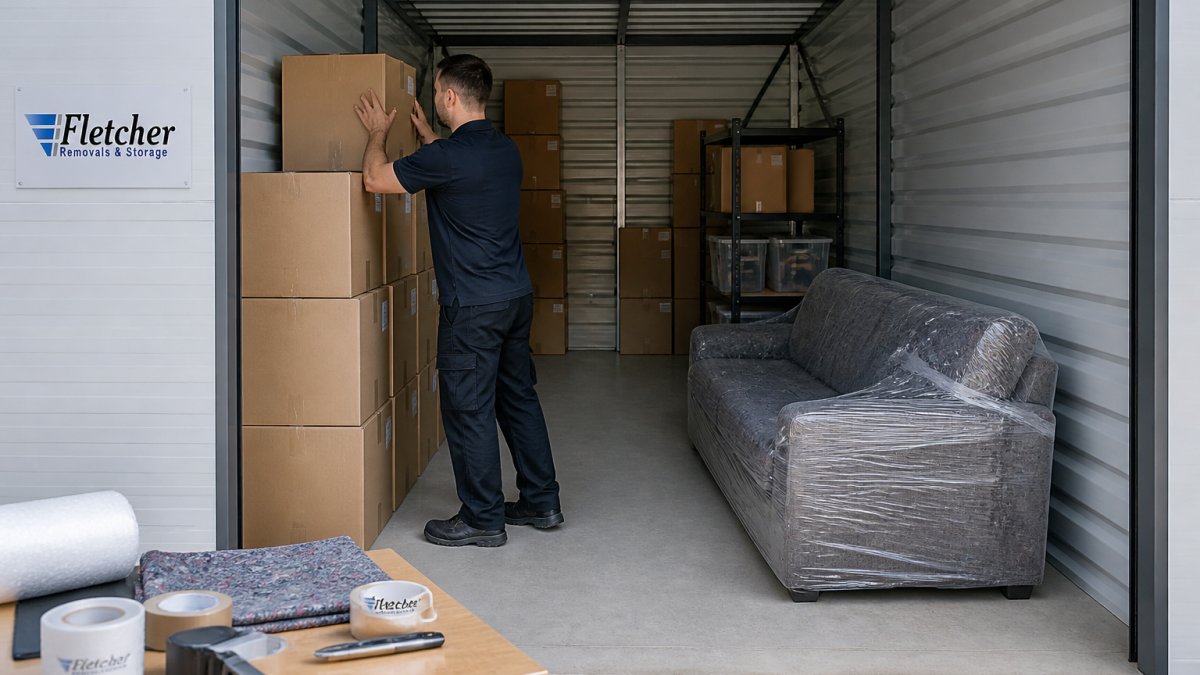
Wrap furniture in breathable covers rather than plastic sheeting. Plastic traps moisture and can leave marks on wood and fabric over time.
Leave an Access Aisle
Always leave a walkway down one side or through the middle. It costs you a little space and saves hours of shifting boxes later. Aim for at least 60 cm of clear width so you can carry items in and out without squeezing.
Common Mistakes to Avoid
The same errors come up again and again. Here are the ones that cost people the most:
- Guessing instead of measuring. A rough eyeball estimate is usually wrong by a wide margin.
- Forgetting height. A unit with a low ceiling holds much less than the floor area suggests.
- Storing air. Half-empty boxes and unstacked furniture waste space you're paying for.
- Skipping the inventory. Without a list, finding anything means unpacking the whole unit.
- Ignoring access needs. If you'll visit monthly, you need aisle space, not a wall of boxes.
When to Ask a Professional to Assess the Job
Sometimes the maths isn't enough. Call in help when:
- You're storing a full house and can't picture the total
- You have antiques, pianos or fragile items needing special handling
- You're between properties and need flexible timing
- You want packing, dismantling and storage handled in one go
At Fletcher Removals and Storage, we offer a personalised assessment of each enquiry. Our trained, uniformed staff can size the job, pack it properly and store it securely at our onsite warehouse. We carry Goods in Transit and Public Liability Insurance, and our pricing is transparent with no hidden fees.
That matters if you're working full-time and can't supervise. You shouldn't have to choose between a convenient service and a careful one.
Frequently Asked Questions
How do I calculate what size storage unit I need?
Measure the length, width and height of each large item, multiply them to get a volume in cubic metres, then add up everything you plan to store. Compare that total to the capacity of the storage unit sizes on offer, and add roughly 10 to 15 per cent for access space and gaps between items. If your total sits close to a unit's limit, size up rather than cram. A storage unit size calculator does the same sum faster, but measuring room by room first keeps the estimate honest.
How many boxes fit in a storage unit?
A standard removal box of roughly 45 x 35 x 35 cm holds about 0.055 cubic metres, so around 18 boxes fill one cubic metre of usable space. In practice you lose space to furniture and aisles, so plan on 12 to 15 boxes per cubic metre. A typical one-bedroom flat's contents, around 8 to 10 cubic metres, therefore works out at roughly 100 to 150 boxes once furniture and white goods are included.
Should I choose a larger storage unit to leave room for access?
Yes, if you will visit the unit regularly. A unit packed to the ceiling leaves no room to reach anything at the back, so you end up unloading half the contents to find one box. Leaving a walkway down one side and keeping frequently needed items near the door makes a slightly larger unit worth the extra cost. If you are storing everything until a single move-out date, a tighter fit is fine.
Is it better to rent a unit that is slightly too large or too small?
Too small is the worse problem. Overfilling a unit means stacking above safe heights, blocking access and risking damage to furniture and fragile items. A unit that is slightly too large costs a little more each month but keeps everything reachable and lets air circulate. Measure carefully, add a margin for access, and if your estimate lands between two sizes, take the larger one for the first month and downsize once you see how it packs.
Sizing a storage unit shouldn't feel like a gamble. Measure room by room, add a sensible buffer, and check your plan against a real unit before you commit. If you'd rather hand the whole job to people who do this daily, Fletcher Removals and Storage can assess your contents, recommend the right space and handle the packing and storage from start to finish. Get in touch with our team for a clear, no-obligation quote and a stress-free move.