 how-to
How to Pack Furniture for Storage Step by Step
Table of Contents
- How to Pack Furniture for Storage Step by Step: What You'll Need First
- How to Prepare Furniture for Storage Before Packing
- How to Disassemble Furniture for Storage Safely
- How to Wrap Furniture for Storage Without Causing Damage
- Packing Furniture for Storage: Loading, Stacking and Positioning
- Furniture Storage Checklist: What to Tick Off Before You Finish
- Common Mistakes to Avoid When Packing Furniture for Storage
- When to Call in the Professionals for Packing and Storage
- Conclusion
- Frequently Asked Questions
Last Updated: October 15, 2026
How to Pack Furniture for Storage Step by Step: What You'll Need First
Packing furniture for storage comes down to four things: clean and dry items, the right wrapping materials, correct disassembly, and sensible stacking. Get those right and your furniture survives months in a unit without warping, scratching or splitting. This guide from Fletcher Removals and Storage walks through the whole job in order, so you can work through it room by room without second-guessing yourself.
Most damage seen in storage isn't caused by the storage itself. It's often caused in the hour before the van arrives, when someone wraps a table in a single old bedsheet and hopes for the best. Below, we'll show you exactly how to pack furniture for storage step by step, including the materials that actually protect surfaces and common mistakes to avoid.
Materials and Tools to Gather Before You Start
Buy your materials before you touch a single item. Stopping halfway through to hunt for tape is how corners get chipped.
Here's what a typical house clearance needs:
- Cardboard boxes in two or three sizes, plus picture boxes for frames
- Bubble wrap, at least one large roll per room
- Furniture blankets or old cotton sheets
- Stretch film (shrink wrap) for holding blankets in place
- Packing tape and a tape dispenser
- Marker pens for labelling
- A screw-top bag or small box for fixings
- Screwdriver set, Allen keys and a small mallet
The Health and Safety Executive guidance on safe manual handling is worth a read before you start lifting. Back injuries from awkward sofa lifts are far more common than people expect.
Clearing, Cleaning and Decluttering Before Packing
Clean every item before it goes into storage. Dirt holds moisture, and moisture is what ruins furniture over time.
Wipe down wooden surfaces with a slightly damp cloth, then dry them fully. Vacuum upholstery and let it air. Empty every drawer, cupboard and shelf, because weight left inside puts stress on joints while an item sits still for weeks.
Now sort what you're actually keeping.
- Anything broken beyond repair: skip it
- Items you haven't used in two years: sell or donate
- Duplicates and old paperwork: recycle
The less you store, the less you pay and the less you have to pack. That's the simplest saving in the whole process.
How to Prepare Furniture for Storage Before Packing
Preparation is where most people cut corners, and it's where the real damage happens. A few minutes per item prevents most of it.
Work through this list for each piece:
- Remove legs, castors and handles where they unscrew
- Take out all glass shelves and mirrors, and wrap them separately
- Empty and defrost fridges and freezers at least 24 hours ahead
- Drain washing machines and dishwashers completely
- Treat leather with a conditioner so it doesn't dry out
- Tape down any loose veneer or trim before wrapping
Wood needs to breathe, so never seal it in plastic film on its own. Wrap in a blanket or cotton sheet first, then use stretch film only to hold the blanket tight.
Metal items benefit from a light wipe with an oiled cloth to keep rust at bay. For anything with a plug, coil the cable, secure it with a tie, and tape the plug to the item so it doesn't swing loose in transit.
How to Disassemble Furniture for Storage Safely
Disassembly makes furniture easier to move, easier to stack, and far less likely to crack under its own weight. But not everything should come apart.
Which Items to Take Apart and Which to Leave Whole
Take apart beds, large wardrobes, dining tables with removable legs, and modular sofas. These are designed to come apart and go back together cleanly.
Leave solid wood dressers, antique pieces, and anything glued or dowelled together. Forcing these apart causes damage that's expensive to fix, and often it can't be fixed at all.
If you're unsure whether a joint is meant to separate, stop and check. A quick look underneath usually tells you whether you're looking at bolts or glue.
Keeping Fixings and Fittings Organised
Loose screws are the single most common cause of a furniture rebuild that never quite works again.
Use one labelled bag per item. Write the item name on the bag, not just "screws". Tape the bag to the largest part of the piece it belongs to, so it can't get separated in the unit.
For anything with more than a handful of fixings, draw a quick sketch and tape the screws to the matching spot on the drawing. It sounds fussy. It saves an hour later.
How to Wrap Furniture for Storage Without Causing Damage
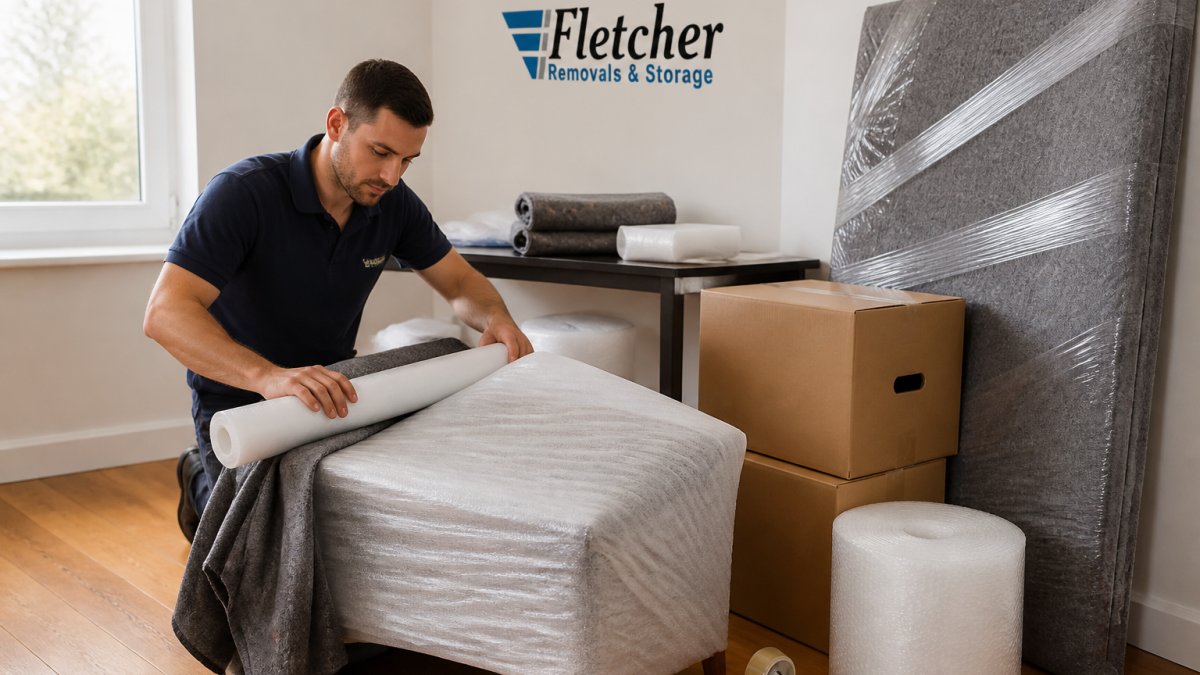
Wrapping is the step that decides whether your furniture comes out looking the same as it went in. The rule is simple: soft layer first, rigid layer second.
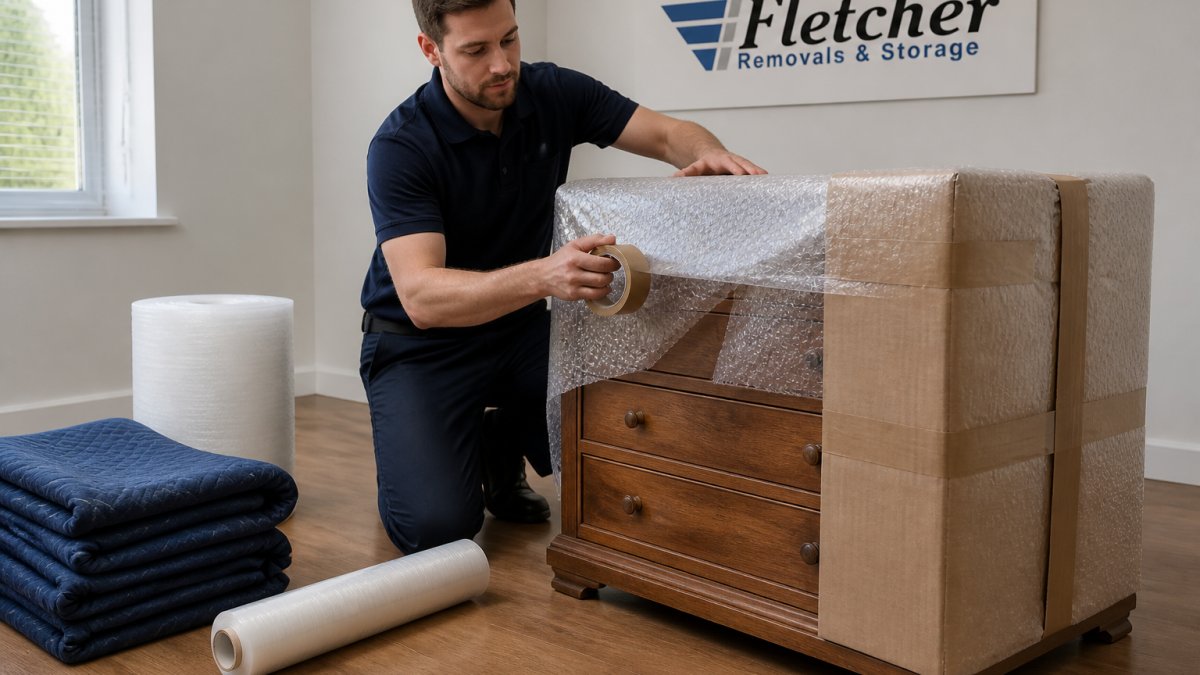
Work in this order:
- Dust and dry the surface
- Wrap in a furniture blanket or cotton sheet
- Secure the blanket with stretch film, not tape directly on the wood
- Add cardboard corners on tables and desks
- Label the outside with the room and item name
Tape straight onto polished wood and you'll lift the finish when you remove it. Tape onto fabric and you'll leave a mark. Always tape onto the wrapping, never the item.
Protecting Wooden, Upholstered and Glass Surfaces
Different materials need different treatment.
- Wood: blanket first, cardboard corners, no plastic against the surface
- Upholstery: vacuum, air, then wrap in breathable covers or sheets, never sealed plastic
- Glass and mirrors: bubble wrap, then rigid cardboard on both faces, stored upright
- Leather: condition first, then wrap in cotton, never plastic
- Metal: wipe with oiled cloth, wrap in blankets
Glass is the one item worth over-wrapping. Store mirrors and glass tabletops standing on edge, never flat, and never with weight on top.
Packing Furniture for Storage: Loading, Stacking and Positioning
How you load the unit matters as much as how you wrap. Weight goes low, heavy items go at the back, and nothing touches the walls directly.
Follow these positioning rules:
- Heaviest items on the floor at the back of the unit
- Stacked chairs and boxes in the middle, lighter items on top
- Leave a small gap between items and the walls for airflow
- Keep a walkway down the centre so you can reach anything
- Never stack heavy boxes on upholstered furniture
Put larger pieces against the side walls and build inward. Mattresses should stand on edge, not lie flat, and sofas should sit upright rather than on their backs.
If you're storing for more than a couple of months, plan to check the unit once. A quick look for damp or pests early saves a much bigger problem later.
Furniture Storage Checklist: What to Tick Off Before You Finish
Run through this before you lock the unit. It takes five minutes and catches most avoidable problems.
- Every item cleaned and fully dry
- All drawers, shelves and cupboards emptied
- Appliances drained and defrosted
- Fixings bagged, labelled and taped to their item
- Every surface wrapped, blanket first
- Glass and mirrors wrapped and stored upright
- Nothing sealed in non-breathable plastic
- Heavy items low and at the back
- Walkway left clear down the centre
- Unit inventory list written and kept somewhere safe
Keep a copy of the inventory at home, not in the unit. You want to know what's in there without opening the door.
Common Mistakes to Avoid When Packing Furniture for Storage
The same handful of errors turn up again and again. Avoiding them is easier than fixing the damage.
Wrapping wood directly in plastic. It traps moisture and causes warping and mould. Always use a breathable layer first.
Leaving weight on furniture. Boxes stacked on a tabletop for months will bow it. Store flat surfaces empty.
Skipping the cleaning step. Dirt and food residue attract pests. A clean item stores far better than a dirty one.
Losing the fixings. Unlabelled screws in a loose bag mean a bed that never goes back together properly.
Storing on a bare concrete floor. Damp rises. Use pallets or wooden battens under anything sitting on the floor.
Overloading the unit. Packing to the ceiling feels efficient until you need something from the back.
When to Call in the Professionals for Packing and Storage
Some jobs are worth doing yourself. Others cost more in damaged furniture than a professional service would have cost in the first place.
Call in a team when you have:
- Antiques, pianos or anything with real value
- A whole house to move and store at short notice
- Heavy items you can't lift safely
- A tight window between leaving one property and moving into the next
- Business equipment that needs dismantling and reassembling
At Fletcher Removals and Storage, we handle packing, dismantling and secure storage as one job. Established in 2013, we carry Goods in Transit and Public Liability Insurance, and we work with both households and businesses across the region.
That last point matters more than people expect. If something does get damaged, you want to know the cover is in place before it happens, not after.
Conclusion
The gap between furniture that survives storage and furniture that doesn't usually comes down to preparation, not luck. Clean it, wrap it in breathable layers, bag the fixings, and stack it with weight low and airflow around it.
If any of that sounds like more than you want to take on, Fletcher Removals and Storage can handle the whole job for you. We offer a full packing service, professional dismantling and reassembly, and secure onsite warehouse storage with both container and self-storage options. Our team is trained, uniformed and insured, and our pricing is transparent with no hidden fees.
Get in touch with Fletcher Removals and Storage for a quote and let us take the packing off your hands.
Frequently Asked Questions
Should you disassemble furniture before putting it in storage?
Disassemble anything that comes apart easily, such as bed frames, tables with removable legs and flat-pack wardrobes. This saves space, reduces the risk of legs snapping under weight and makes items far easier to wrap. Keep all screws, bolts and Allen keys in a labelled bag taped to the largest piece. If a joint is glued, rusted or awkward to reach, leave it assembled and wrap it whole rather than forcing it apart.
What is the best way to wrap furniture for storage?
Start with a soft layer against the surface, such as old sheets or bubble wrap, then add a rigid outer layer of cardboard or furniture blankets. Secure everything with packing tape, but never tape directly onto wood, varnish or fabric because the adhesive can mark or tear the finish. Wrap corners with extra cardboard, and use stretch film on upholstered pieces to keep dust and damp out.
How do you stop furniture getting damp in storage?
Never let furniture sit directly on a concrete floor. Raise it on wooden pallets or battens so air can circulate underneath, and leave a small gap between items and the walls. Avoid sealing wooden furniture in plastic, which traps moisture; use breathable covers or blankets instead. Silica gel sachets inside drawers and cupboards help absorb excess moisture, and a dry, well-ventilated unit does more for your furniture than any single product.
What should you not store with furniture?
Keep paint tins, solvents, petrol, gas canisters and other flammable or corrosive liquids out of storage entirely. Don't pile heavy boxes on top of sofas, mattresses or glass-topped tables, and avoid storing food, which attracts pests. If you are packing a furniture storage checklist, add a line for anything damp, such as garden tools or wet camping gear, and dry it fully before it goes in with your furniture.