 blog
Is Home Insurance Enough for Storage Units?
Last Updated: October 23, 2026
Quick Summary
Home insurance is usually not enough for storage units, as most home contents policies only cover items temporarily away from home within strict limits. Storage units are often excluded entirely, and business stock is almost always excluded. Dedicated storage unit insurance is needed when goods are valuable, long-term or commercial.
- The away-from-home clause usually covers items only temporarily away from home, not long-term storage.
- Business inventory and stock are treated as commercial goods and excluded by home policies.
- Check the total away-from-home limit against the realistic replacement value of everything stored.
- Dedicated storage cover typically includes fire, flood, storm, theft and accidental damage.
- Home cover may suffice for short stays, low-value personal goods and written insurer confirmation.
Table of Contents
- What Home Insurance Typically Covers for Storage Units
- Home Contents Insurance Away From Home: What It Actually Protects
- Where Home Cover Falls Short: Storage Insurance Exclusions
- Contents Insurance Limits in Storage: Why the Cap Matters
- What Dedicated Storage Unit Insurance Cover Includes
- Home Insurance vs Storage Insurance: Costs and Benefits Compared
- How to Check Your Policy Before You Store Anything
- When Home Insurance Is Enough for Storage Units (and When It Isn't)
- Frequently Asked Questions
What Home Insurance Typically Covers for Storage Units
Is home insurance coverage enough for storage units? Usually not. Most home contents policies cover items temporarily away from home, but only within strict limits, and a storage unit is rarely treated like a spare room.
At Fletcher Removals and Storage, we hear this question before almost every storage booking. Families downsizing between sales, businesses holding stock, people in a six-week gap between tenancies: all of them want to know whether their existing cover follows their belongings into a warehouse.
The honest answer is: partly, and less than you'd hope. A standard home contents policy is built for your home. When goods leave it, the cover shrinks.
The 'Away From Home' Clause Most People Miss
That clause is where the trouble starts. It sounds generous. In practice it's narrow.
- It usually covers items temporarily away from home, not long-term storage
- It often caps the total value covered outside the property
- Some policies exclude storage units entirely
- Business stock is almost always excluded
So the clause exists. It just doesn't do what most people assume.
Home Contents Insurance Away From Home: What It Actually Protects
Home contents insurance away from home protects personal belongings while you carry them or keep them temporarily elsewhere. Think a laptop in a hotel, a bike locked up overnight, or a suitcase in a car boot.
That's the typical scope. A storage unit sits at the edge of it, and many insurers draw the line there.
What tends to be covered:
- Personal items taken with you on trips
- Belongings in transit during a move, subject to limits
- Items at a temporary address for a short period
What tends to fall outside:
- Goods in a commercial storage facility
- Anything stored for weeks or months
- High-value items above the single-item cap
The Financial Conduct Authority guidance on home insurance sets out how policies must be sold clearly, so the exclusions should be in your documents. Read them before you assume you're covered.
Where Home Cover Falls Short: Storage Insurance Exclusions
Storage insurance exclusions are the specific situations where your home policy simply won't pay out. These are the gaps that catch people out after a loss, not before it.
The most common ones:
- Business inventory and stock, which home policies treat as commercial goods
- Items stored for long periods, beyond the "temporary" window
- Theft from an unsecured or unattended unit
- Damage from damp, pests or poor packing
- Single-item limits that leave an antique or a piece of art underinsured
If you run a small business and hold stock, home cover is the wrong tool. Our guide to secure storage solutions for small business inventory covers how to protect goods that a home policy won't touch.
Exclusions That Catch People Out Most Often
Two stand out. First, the "temporary" wording: leave goods in storage for months and you may be outside the clause entirely. Second, the business goods exclusion, which quietly voids cover for anyone storing stock or equipment.
Contents Insurance Limits in Storage: Why the Cap Matters
Contents insurance limits in storage are the maximum your policy will pay for goods kept away from home. That cap is often far lower than the total value of what people actually put in a unit.
Picture a three-bedroom house downsized into storage. Furniture, white goods, boxes, tools, bikes. The total value adds up fast, and the "away from home" cap may cover only a fraction of it.
- Check the total away-from-home limit, not just the single-item limit
- Add up the realistic replacement value of everything you're storing
- Compare the two figures honestly
- Note any category caps, such as jewellery or electronics
If the gap is wide, dedicated cover closes it.
What Dedicated Storage Unit Insurance Cover Includes
Storage unit insurance cover is a policy built for goods kept in a storage facility. It covers what home insurance leaves behind.
Typical protection includes:
- Fire, flood and storm damage to stored goods
- Theft and break-in from the unit
- Accidental damage during handling in the facility
- Higher or unlimited total values, set to what you're storing
- Business stock and equipment, where the policy allows
Removal firms often carry their own Goods in Transit and Public Liability Insurance, which covers your belongings while they're being moved. That's a different thing from storage cover, and worth understanding separately. Our article on whether removal companies provide insurance cover explains where transit protection ends and storage protection begins.
Home Insurance vs Storage Insurance: Costs and Benefits Compared
Neither option is automatically cheaper. Home cover feels free because you already pay for it, but the limits may leave you exposed. Dedicated storage cover costs extra, yet it pays out where home cover won't.
| Feature | Home Contents Policy | Dedicated Storage Cover |
|---|---|---|
| Items away from home | Temporary, capped | Purpose-built for storage |
| Business stock | Usually excluded | Often included |
| Total value limit | Low away-from-home cap | Set to your goods |
| Theft from unit | Often restricted | Covered |
| Cost | Already included | Separate premium |
The trade-off is simple. Home cover is cheap because it's narrow. Storage cover costs more because it actually protects what's in the unit.
If you're weighing moving cover against storage cover, our moving company insurance coverage guide breaks down how the two fit together.
How to Check Your Policy Before You Store Anything
Checking your policy takes twenty minutes and saves arguments later. Do it before the boxes leave the house.
Work through this checklist:
- Find the "away from home" or "property temporarily removed" clause
- Note the total limit for goods outside the home
- Check whether storage units are named or excluded
- Confirm whether business goods are covered
- List high-value items and check single-item caps
- Call your insurer and ask directly about storage
- Get any confirmation in writing
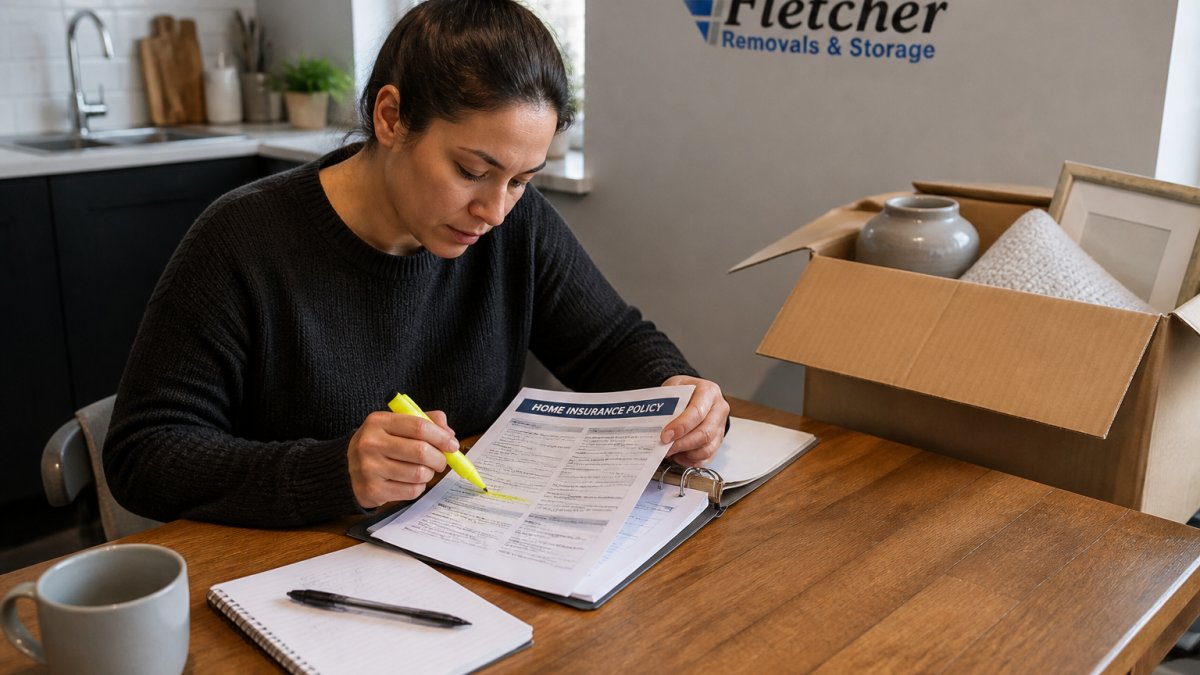
Packing matters too. Poorly packed furniture invites damp and damage claims that no policy will honour. Our step-by-step guide on how to pack furniture for storage covers the practical side.
When Home Insurance Is Enough for Storage Units (and When It Isn't)
Home insurance is enough for storage units only in narrow cases: a short stay, low-value goods, personal items, and a policy that clearly covers the unit. Outside that, it isn't.
It's probably enough when:
- You're storing for days, not months
- The total value is well under your away-from-home cap
- Everything is personal, not business, property
- Your insurer confirms storage is covered in writing
It isn't enough when:
- You're storing business stock or equipment
- The goods are worth more than the cap
- The stay is long-term or open-ended
- You own antiques, art or high-value items
For homeowners storing furniture through a house move, our guide to secure furniture storage for homeowners walks through the options once home cover falls short.
At Fletcher Removals and Storage, we've handled storage for families and businesses since 2013, with onsite warehouse storage. We'll tell you honestly what your policy needs to do.
Frequently Asked Questions
Does home contents insurance cover belongings in a storage unit?
Sometimes, but not automatically. Many home contents policies extend cover to possessions kept away from home, including storage units, but only up to a set limit and only for listed events such as fire or theft. Check the away-from-home clause in your policy schedule before you move anything in. If the clause is missing, or the limit is low, dedicated storage unit insurance cover is the safer route.
How much does home insurance cover for items kept away from home?
It varies by policy. Some home contents policies cap away-from-home cover at a fixed percentage of your contents sum insured, while others set a flat limit. The cap usually applies to the total value of everything stored, not per item. Add up the replacement value of what you plan to store, then compare that figure with the limit in your policy. If your belongings are worth more than the cap, top up with dedicated storage cover.
Do I need separate insurance for a storage unit?
Not always, but often yes. If your home policy has a generous away-from-home limit and few storage insurance exclusions, you may be adequately covered. You do need separate cover if your policy excludes storage entirely, if your belongings exceed the away-from-home cap, or if the storage facility requires proof of insurance as a condition of hire. Ask the facility what they require and confirm it in writing before signing.
Are items in a storage unit covered for theft or water damage?
Theft is commonly covered under home policies that extend to storage, provided the unit was locked and entry was forced. Water damage is less reliable. Many policies exclude damage caused by damp, condensation, vermin or gradual deterioration, which are common risks in storage. Check the storage insurance exclusions section of your policy carefully. If water damage matters to you, dedicated storage unit insurance cover is more likely to include it.
The gap between "I think I'm covered" and "I'm actually covered" is where belongings get lost twice: once to damage, once to a declined claim. Don't leave it to chance. Fletcher Removals and Storage offers secure onsite warehouse storage, trained uniformed staff, and clear guidance on what your cover needs to include. Get in touch with our team and store your belongings with confidence.