 blog
7 Steps to a Stress Free House Move: 2026 Guide
Table of Contents
- Why Most House Moves Feel Stressful (and What Changes That)
- Step 1: Build Your Moving House Timeline Six to Eight Weeks Out
- Step 2: Create a Moving House Checklist That Actually Gets Used
- Step 3: Declutter Before You Pack Anything
- Step 4: Learn How to Pack for Moving House Without Damaging Anything
- Step 5: Decide What You Handle Yourself and What You Hand Over
- Step 6: Moving House With Pets: Plan Their Day Separately
- Step 7: Manage Completion Day Itself
- The First Week: Settling In Without Undoing the Calm
- Conclusion: A Stress Free House Move Is a Planned One
- Frequently Asked Questions
Last Updated: 13 October 2026
Why Most House Moves Feel Stressful (and What Changes That)
Most house moves feel stressful because the work is compressed into the final week, when nothing can be fixed. A stress free house move is not about luck or a calm personality. It is about spreading the decisions across six to eight weeks so the last few days are boring.
Fletcher Removals and Storage was established in 2013. The pattern is always the same. People who book early, declutter properly and label their boxes have a quiet completion day. Everyone else is still taping boxes at midnight.
The good news is that the fix is simple. This guide breaks the whole process into seven steps, from your first booking to your first week in the new place. Below, we show you exactly how to run each one, and what most guides get wrong about timing.
Step 1: Build Your Moving House Timeline Six to Eight Weeks Out
A moving house timeline is a dated plan that assigns every task to a specific week, so nothing lands on completion day. Start it six to eight weeks before you move, and work backwards from your completion date.
Here is how the weeks usually break down:
- Weeks 6 to 8: Get removal quotes, confirm your date, start decluttering
- Weeks 4 to 5: Book a full packing service if you want one, order boxes
- Weeks 2 to 3: Pack non-essentials room by room, notify utilities and your council
- Final week: Pack essentials, confirm timings in writing, prepare a survival box
- Completion day: Hand over keys, oversee the load, check the new property
Write the dates on a calendar you actually look at. A timeline saved in a folder gets ignored.
What to Book and When
Removal firms fill up fastest at month end and around school holidays. If your date falls in either window, book as early as you can.
Ask every firm the same three questions: what is included, what is excluded, and what happens if the date slips. Get it in writing. Citizens Advice guidance on hiring a removal firm explains your rights if something goes wrong, so read it before you sign anything.
Step 2: Create a Moving House Checklist That Actually Gets Used
A moving house checklist works when it lives somewhere visible and gets ticked off daily. One long list buried in a drawer helps nobody.
Split it into three lists instead:
- Admin: council tax, utilities, GP registration, Royal Mail redirection
- Packing: one line per room, with a target date for each
- Day itself: keys, meter readings, the survival box
Keep the day list to ten items or fewer. A long list on completion day causes panic.
Room-by-Room Priorities
Pack rooms in order of how little you need them. Spare room first, then loft or garage, then living areas. The kitchen and bedrooms go last.
Label every box with the room and a short contents note. "Kitchen: mugs, kettle, tea" saves you twenty minutes of hunting on night one.
Step 3: Declutter Before You Pack Anything
Decluttering before you pack is the step that saves the most time and money. Every box you do not move is a box you do not pack, carry, unpack or store.
Work through one room at a time and sort items into four piles: keep, sell, donate, bin. Be honest about the "might need it" pile. If you have not used something in two years, you will not use it in the new house either.
Selling bulky items before the move also cuts your load size, which can reduce what you pay. Charity shops, online marketplaces and local collection services all take furniture and clothing.
Book a skip or a council bulky waste collection for anything left over. Do this at least a fortnight before you move, because collection slots fill quickly.
Step 4: Learn How to Pack for Moving House Without Damaging Anything
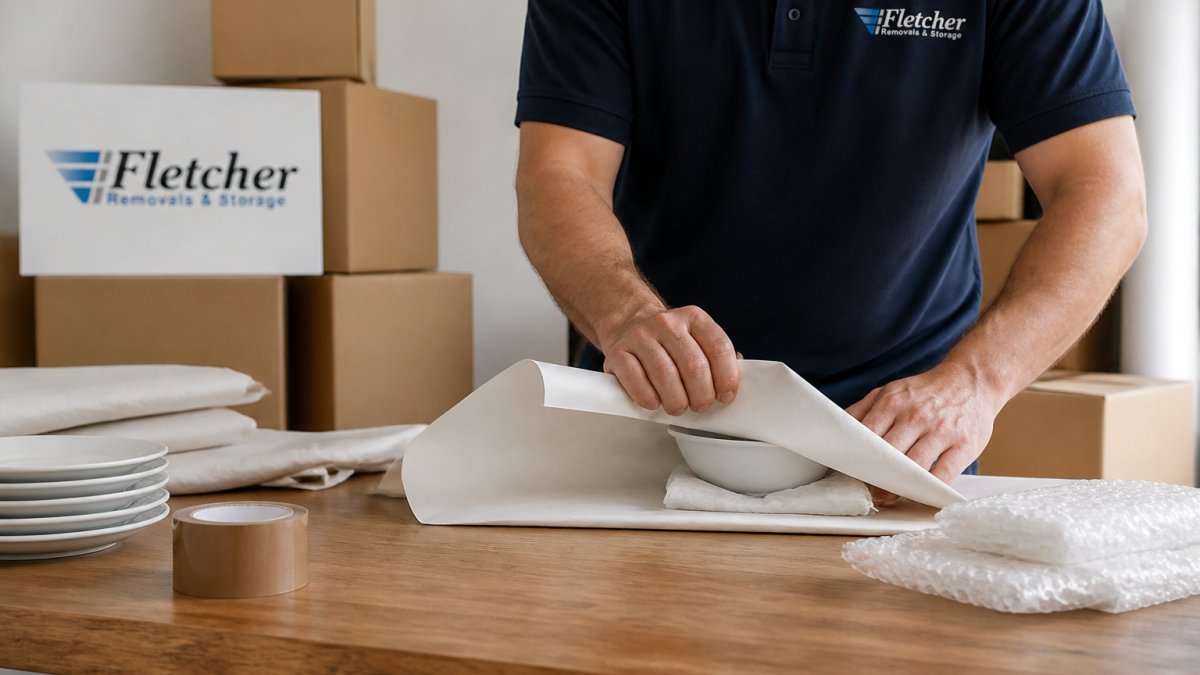
Learning how to pack for moving house comes down to three habits: right box, right padding, right weight. Use double-walled boxes for heavy items, wrap everything fragile, and keep each box light enough for one person to lift.
Royal Mail guidance on packing items safely is written for post, but the same principles apply to a removal van: fill gaps, cushion edges, and never let items rattle.
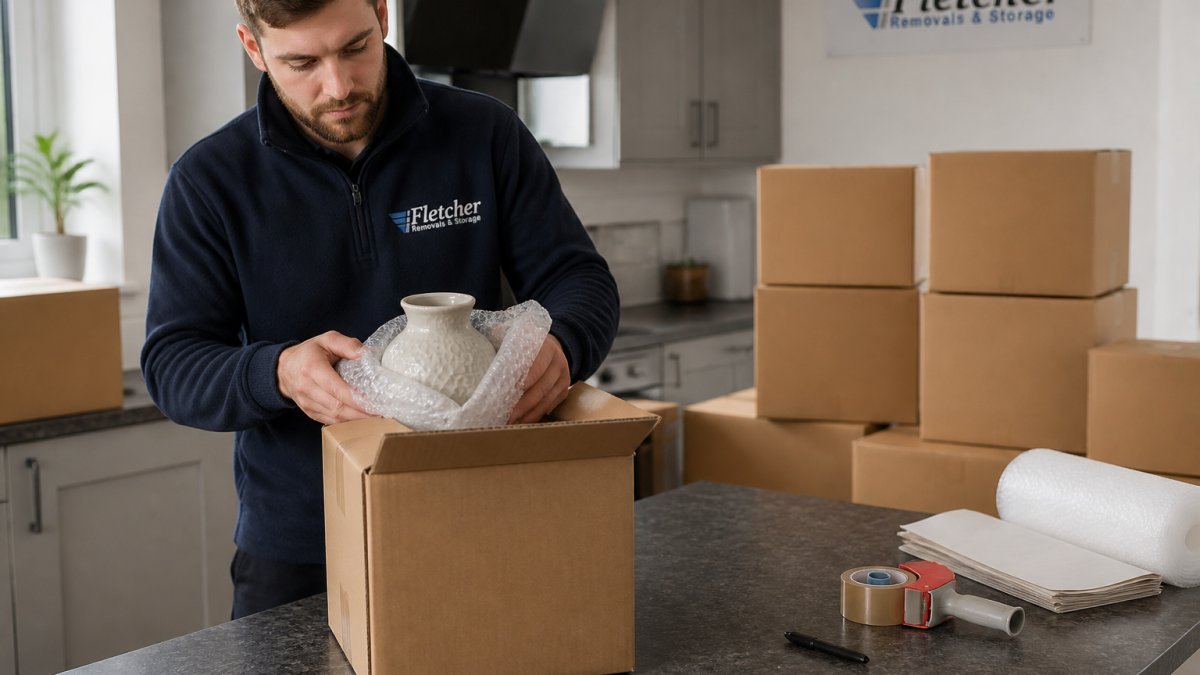
A few rules that prevent most damage:
- Heavy items go in small boxes, light items in large ones
- Fill every gap with paper or bubble wrap so nothing shifts
- Tape the bottom of each box before you fill it, not after
- Keep screws and fittings in a labelled bag taped to the furniture they belong to
Fragile Items, Antiques and the Boxes People Get Wrong
Antiques and fragile items need more than a standard box. Mirrors, glass and artwork should travel upright, never flat, and be wrapped in acid-free tissue before bubble wrap.
China and glassware travel best in double-walled boxes with a layer of padding between every item, not just around the edges. Books are the box people get wrong most often. A small box of books weighs more than most people expect, so use small boxes and never mix books with glass.
If you have genuine antiques, tell your removal firm before the quote. Trained crews handle these differently, and it affects both packing and insurance.
Step 5: Decide What You Handle Yourself and What You Hand Over
Deciding what to handle yourself is a trade-off between time, risk and money. Packing your own clothes and books is fine. Dismantling beds, wardrobes and white goods is where most damage happens.
A full packing service covers boxes, materials and labour. It costs more than doing it yourself, but it removes the two biggest sources of stress: time and breakages.
Fletcher Removals and Storage offers a full packing service, furniture dismantling and reassembly, and secure onsite storage in container and self-storage options. That matters if you are between properties for a few weeks. We can hold your belongings securely.
If you are not sure, ask for a quote for both options. Most people find the difference is smaller than they expect once they price up boxes, tape and their own annual leave.
Step 6: Moving House With Pets: Plan Their Day Separately
Moving house with pets needs its own plan, because animals pick up on disruption long before the van arrives. Keep their routine as normal as possible in the final week.
On the day itself, move pets out of the way entirely. A quiet room with the door shut, or a friend's house, works better than letting them watch boxes leave.
A short checklist for pet owners:
- Update the microchip details and tag as soon as you have the new address (Get your dog or cat microchipped)
- Register with a new vet before you move, not after
- Pack their food, bowls, bedding and medication in the survival box
- Travel them in a secure carrier, never loose in the car
- Keep them in one room at the new house while you unload
Cats in particular should stay indoors for a couple of weeks after a move, so they learn where home is before they explore.
Step 7: Manage Completion Day Itself
Completion day runs smoothly when you do three things: confirm timings in advance, keep one person free to direct, and check the property before the van leaves.
The night before, pack a survival box with everything you need for the first 24 hours: bedding, towels, toiletries, chargers, pet food, snacks and a kettle. Load it last and unload it first.
On the day:
- Take meter readings at both properties and photograph them
- Walk the old house room by room before the van leaves
- Keep your phone charged and your paperwork to hand
- Direct the crew at the new house rather than unpacking yourself
If you are using a professional removals team, your job is to answer questions and check the inventory.
The First Week: Settling In Without Undoing the Calm
The first week is about function, not perfection. Unpack the kitchen, bedrooms and bathrooms first. Leave the spare room and loft for later.
Change your address with the council, your bank, your employer and any subscription services. Book a GP registration if you have moved area. These tasks take minutes now and cause problems if left for months.
Meet the neighbours if you can. A quick hello makes the new street feel less strange, and it gives you someone to ask about bin days and local services.
Keep the empty boxes flat in the garage for a few weeks. You will want them if anything needs returning, and it saves buying more later.
Conclusion: A Stress Free House Move Is a Planned One
A stress free house move is not about having less to move. It is about starting early and handing the heavy work to people who do it every day.
If your timeline is getting tight, or you simply want the packing and lifting off your plate, Fletcher Removals and Storage can help. We offer a full packing service, furniture dismantling and reassembly, and secure onsite storage in container and self-storage options, all covered by Goods in Transit and Public Liability Insurance.
Send us your details and we will build a plan around your date.
Frequently Asked Questions
How do I make moving house less stressful?
Start earlier than feels necessary. Most of the pressure in a house move comes from compressing decisions into the final week. Build a moving house timeline six to eight weeks out, work through a moving house checklist room by room, and book your removal company as soon as your completion date is confirmed. Handing packing and furniture dismantling to a professional team removes the single biggest source of last-minute panic, and it means you are not carrying boxes the day before completion.
When should I start planning a house move?
Six to eight weeks before your target date is a sensible starting point for most households. That gives you time to declutter properly, get removal quotes, arrange storage if you need a gap between properties, and sort the admin side such as redirecting post and notifying councils and utilities. If you are selling as well as buying, begin earlier, because your completion date depends on the chain. Once you have a date, confirm your removal booking immediately, as popular slots go first.
How long does it take to pack a house for moving?
A one-bedroom flat is usually a day's work for one or two people. A three-bedroom family home typically takes two to four days of steady effort, and larger properties with garages, lofts or sheds take longer. The mistake people make is leaving it all to the final 48 hours. Spread packing across a fortnight, starting with rooms you use least, and leave everyday essentials until last. A full packing service removes this timescale from your plate entirely.
How can I keep pets calm during a house move?
Treat moving day as a separate plan for your pet. Keep cats and dogs out of the packing chaos, ideally with a friend, family member or boarding facility for the day. Move their bedding, bowls and familiar toys in your own car rather than the removal van, and set up one quiet room in the new property before letting them explore. Dogs should be walked before the van arrives. Cats often settle faster if confined to a single room with their belongings for the first day or two.