 listicle
5 Best Tips for Moving House With Pets
Table of Contents
- Plan the Move Around Your Pet, Not the Other Way Round
- Update Your Pet's Microchip Address Before You Unpack
- Build a Pet Moving Essentials Kit for the First 48 Hours
- Keep Your Pet Calm and Secure on Moving Day
- Introducing Pets to a New Home: Room by Room
- Common Mistakes Owners Make When Moving House With Pets
- Conclusion
- Frequently Asked Questions
Last Updated: October 1, 2026
Plan the Move Around Your Pet, Not the Other Way Round
Most moving guides treat pets as an afterthought. That is the first mistake. Moving house with pets works far better when the animal's routine shapes the schedule, not the other way around. A calm dog or cat on moving day starts with planning weeks in advance, not on the morning itself.
Start by picking your removal date with your pet's daily rhythm in mind. A pet that expects a walk at 7am and breakfast at 8am will cope badly with a day that starts at 5am with strangers carrying boxes.
Book Your Removal Date With Your Pet's Routine in Mind
Choose a moving day that disrupts feeding and walk times as little as possible. Midweek dates often suit pets better than weekends because roads are quieter and the day runs to a more predictable schedule.
If you can, arrange for your pet to stay with a friend or family member for the day. Failing that, block out a quiet room well before the van arrives.
Arrange Pet Boarding or a Quiet Room for Moving Day
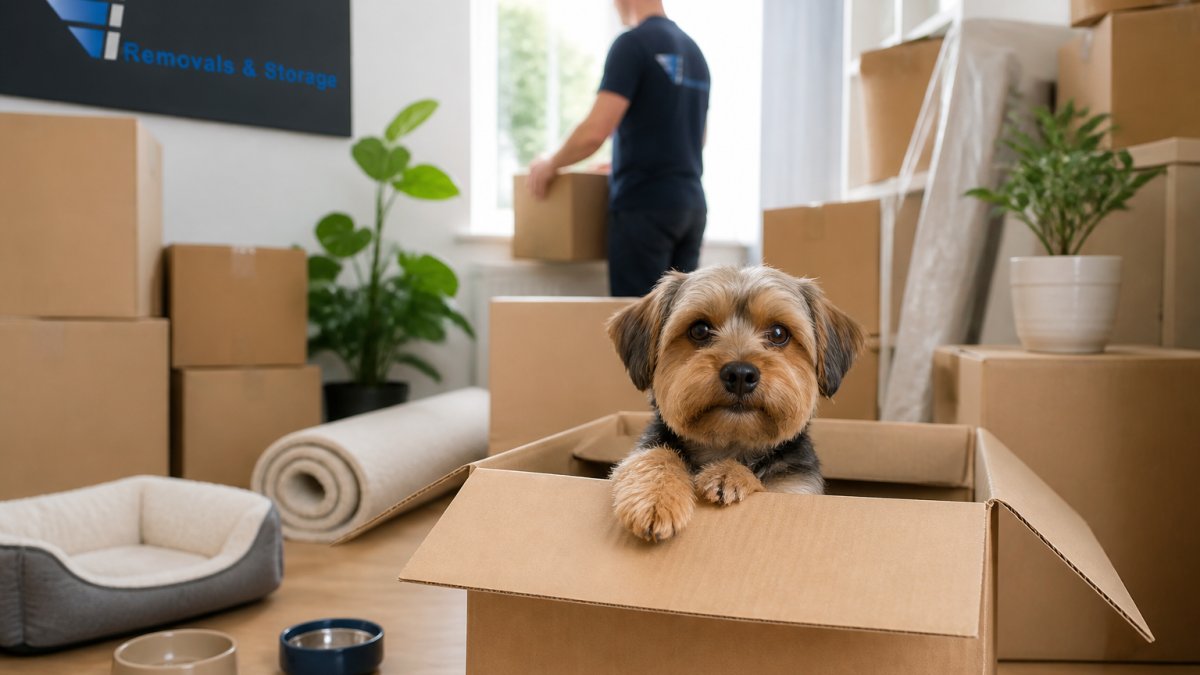
A quiet room is the simplest solution: one room, door closed, curtains drawn, with your pet's bed, water bowl, and a familiar toy inside. Put a clear note on the door so nobody opens it by accident.
Boarding kennels or a trusted sitter work well for anxious animals or long-distance moves. Book early, since good kennels fill up fast in peak moving season.
Update Your Pet's Microchip Address Before You Unpack
Updating your pet's microchip address is the single most important admin task of the whole move, and it is the one owners forget most often. In the UK, your pet's microchip only works if the contact details stored against it are current. If your cat slips out of a new front door and someone scans the chip, an old address means you may never get the call.
Why the Microchip Database Matters More Than the Chip Itself
The chip is just a number. The database is what turns that number into your phone number. Under UK rules, dogs must be microchipped and the keeper's details kept up to date, and the same principle applies to cats. If you move and do not update your record, the chip is effectively silent.
You can check which database holds your pet's details by asking your vet or using the UK Pet Chip Checker service. That tells you exactly where to log the change.
How to Update Your Details in Minutes
The process is quick once you know where your record lives:
- Find your pet's microchip number on the original paperwork or ask your vet to scan it
- Look up the database that holds the record
- Log in or call the database's helpline
- Give your new address, phone number, and email
- Ask for written confirmation of the change
Do this the week you exchange contracts, not the week you move. It takes minutes and removes a real risk.
Build a Pet Moving Essentials Kit for the First 48 Hours
A pet moving essentials kit is a single box or bag holding everything your animal needs for the first two days in the new home. The point is simple: you will not want to dig through labelled cartons at 10pm looking for a lead or a tin of food.
What Belongs in the Kit
- Enough food for three days, plus bowls
- Any medication, with dosage notes
- Lead, harness, or carrier
- Litter tray and litter for cats
- Bed, blanket, and one familiar toy
- Microchip paperwork and vet records
- Towels for muddy paws or accidents
Keep the kit in your own car, not the removal van. That way it travels with you and arrives when you do.
Keep Your Pet Calm and Secure on Moving Day
Moving day itself is about containment and calm. Keep your pet in the quiet room or at the sitter's until the van is loaded and the front door is closed for the last time. Only then bring them out for the journey.
On the drive, use a secured carrier or a pet seatbelt harness. A loose animal in a car is a distraction and a danger. Cover the carrier with a light blanket to reduce visual stress, and avoid feeding a heavy meal right before travel.
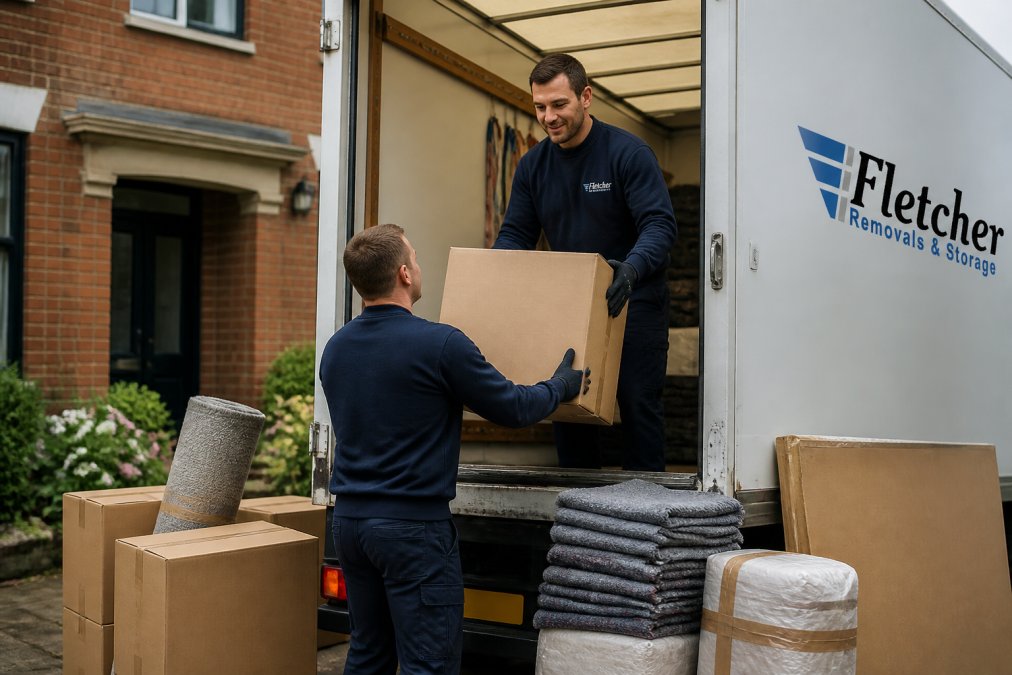
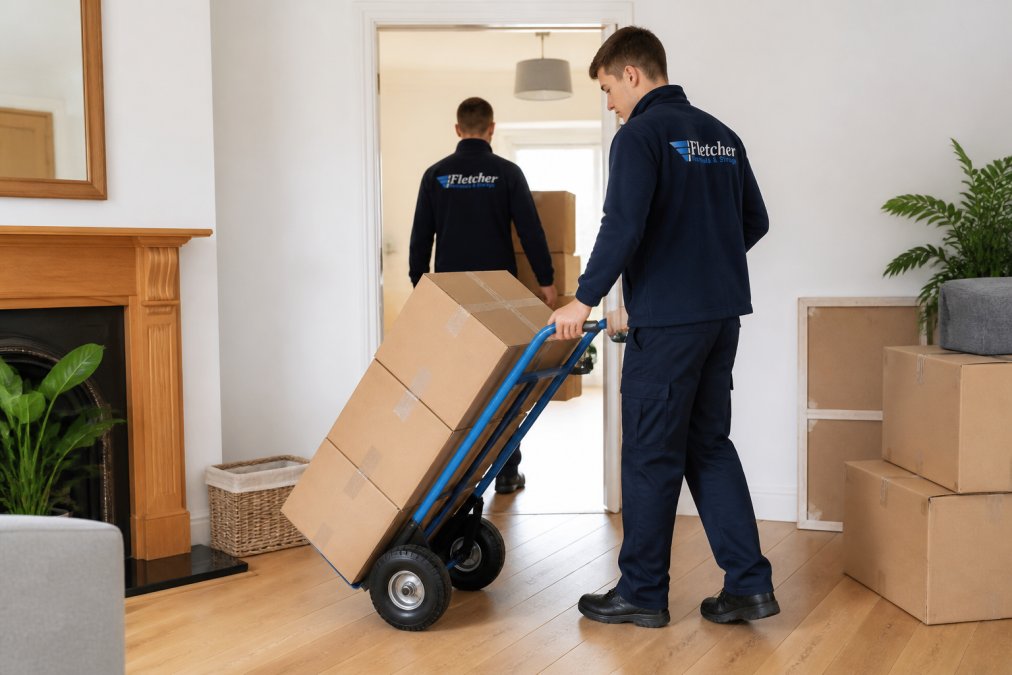
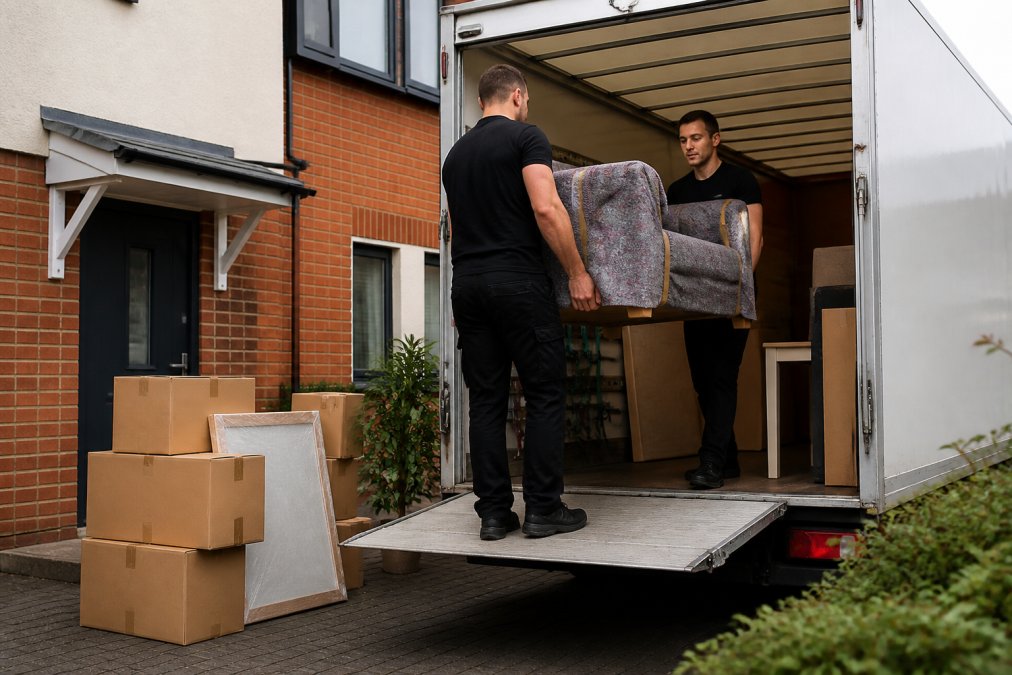
If you are using a professional removals team, tell them in advance that there is a pet in the house. Good crews will work around the quiet room without being asked twice, and they will keep doors closed as they carry items out.
Introducing Pets to a New Home: Room by Room
Introducing pets to a new home works best one room at a time. Do not give a cat or dog the run of the whole house on day one. Start with a single room that has their bed, water, and litter tray, and let them settle there first.
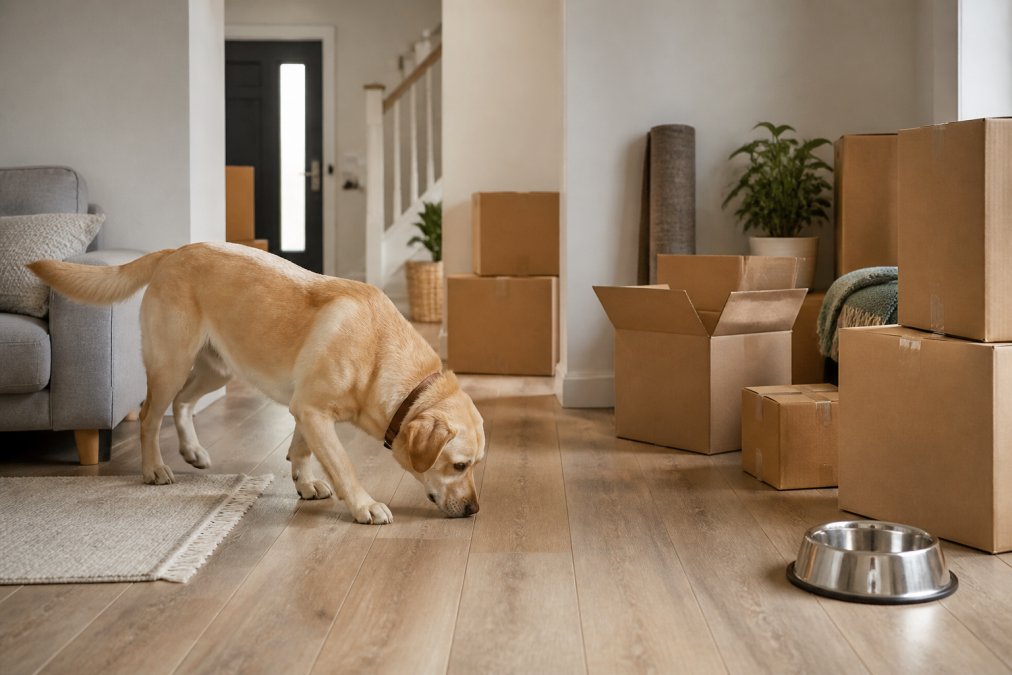
Once your pet is relaxed in that room, open the door and let them explore at their own pace. Cats in particular benefit from being kept indoors for the first few weeks after a move. This gives them time to imprint on the new home before they are allowed outside.
Keep the garden secure before any outdoor access. Check fences, gates, and any gaps a small animal could squeeze through. For cats, a few days indoors followed by supervised garden visits is a safer route than an open cat flap on day one.
Common Mistakes Owners Make When Moving House With Pets
The same mistakes come up move after move. Avoiding them is easier than fixing the fallout.
| Mistake | Why It Causes Problems | Better Approach |
|---|---|---|
| Forgetting the microchip update | Old details mean a lost pet cannot be traced | Update the database the week you exchange |
| Letting the pet roam on moving day | Stress, escape risk, and trips underfoot | Confine to a quiet room or sitter |
| Packing the essentials kit in the van | No food, lead, or medication on arrival | Keep the kit in your own car |
| Opening the whole house at once | Overwhelm and hiding for days | Introduce one room, then expand slowly |
| Allowing outdoor access too soon | Pets bolt and get lost in unfamiliar streets | Keep cats in for weeks; secure the garden first |
One more mistake worth naming: assuming a pet will "just settle". Some do. Many need a fortnight of patience. Plan for the slower version and you will rarely be caught out.
Conclusion
Moving house with pets asks more of you than moving house alone, and the details that matter most are the ones nobody enjoys doing: updating records, packing the right box, and shutting a door when you would rather have your dog underfoot. Get those right and the rest of the move tends to look after itself.
If you would rather hand the heavy lifting to a team that plans around your household, Fletcher Removals and Storage can help. We offer a full packing service, careful dismantling and reassembly of furniture, and secure onsite warehouse storage if you are between homes for a few weeks. Our trained, uniformed staff work with transparent pricing and no hidden fees, and every move is covered by Goods in Transit and Public Liability Insurance.
Get started with Fletcher Removals and Storage and move into your new home with one less thing to worry about.
Frequently Asked Questions
How do I keep my pet calm during a house move?
Stick to your pet's normal feeding and walk times in the days before the move, and keep them away from the packing chaos. On the day itself, settle them in one quiet room with a familiar blanket, toy and water bowl, or book them into a trusted boarding facility. A plug-in pheromone diffuser can help some cats and dogs settle. If your pet is anxious by nature, speak to your vet before moving day about options.
Should I keep my pet in a separate room on moving day?
Yes. Removals teams move furniture in and out through open doors, and the noise and strangers can spook even confident pets. Set up one room with their bed, water, litter tray or puppy pads, and a sign on the door so nobody opens it. Check on them every couple of hours, and only bring them out once the van has left and the front door is closed.
How do I update my pet's microchip address after moving?
Log in to the database your pet's chip is registered with, such as Petlog, identibase or Animal Tracker, and update your address and phone number. You will need your pet's microchip number, which is on your registration paperwork or can be scanned by your vet. Do this before you unpack, not weeks later. Under UK law your dog's microchip details must be kept up to date, so it is a legal requirement, not just good practice.
What should I pack in a pet essentials kit for moving day?
Put together a labelled box or bag with food and a tin opener, bowls, leads and harnesses, litter and a tray, waste bags, any medication, vaccination records, a favourite toy or blanket, and a towel. Keep it with you in the car rather than on the removal van, so it is the first thing you unpack at the new property. A pet moving essentials kit saves you hunting through boxes when your pet needs feeding or a walk.