 how-to
Moving House with Antique Furniture: 2026 Tips
Table of Contents
- What You'll Need Before You Start
- How to Pack Antique Furniture for Moving
- How to Protect Antique Furniture When Moving
- Moving a Heavy Antique Wardrobe
- Packing Antique Furniture for Storage
- Insurance and Valuation for Antique Furniture Moving
- When to Call Professional Movers for Antique Furniture
- Common Mistakes to Avoid
- Conclusion
- Frequently Asked Questions
Last Updated: 8 October 2026
What You'll Need Before You Start
Antique furniture moving starts with preparation, not packing. Gather the right materials first, because a rushed start is how chips, scratches and snapped joints happen.
The kit matters as much as the technique. Here's what to have ready:
- Acid-free tissue paper for surfaces and inlays
- Bubble wrap and foam sheets for cushioning
- Moving blankets and furniture pads
- Low-tack tape and soft cotton string
- Corner protectors and cardboard sheets
- A notebook for labelling and photographing
The Arts Council guidance on caring for collections makes a useful point: stable temperature and gentle handling protect value far better than expensive materials alone.
Work out the value of each piece before you touch a roll of tape. That single step shapes how you pack, what insurance you need and whether you call in help.
How to Pack Antique Furniture for Moving
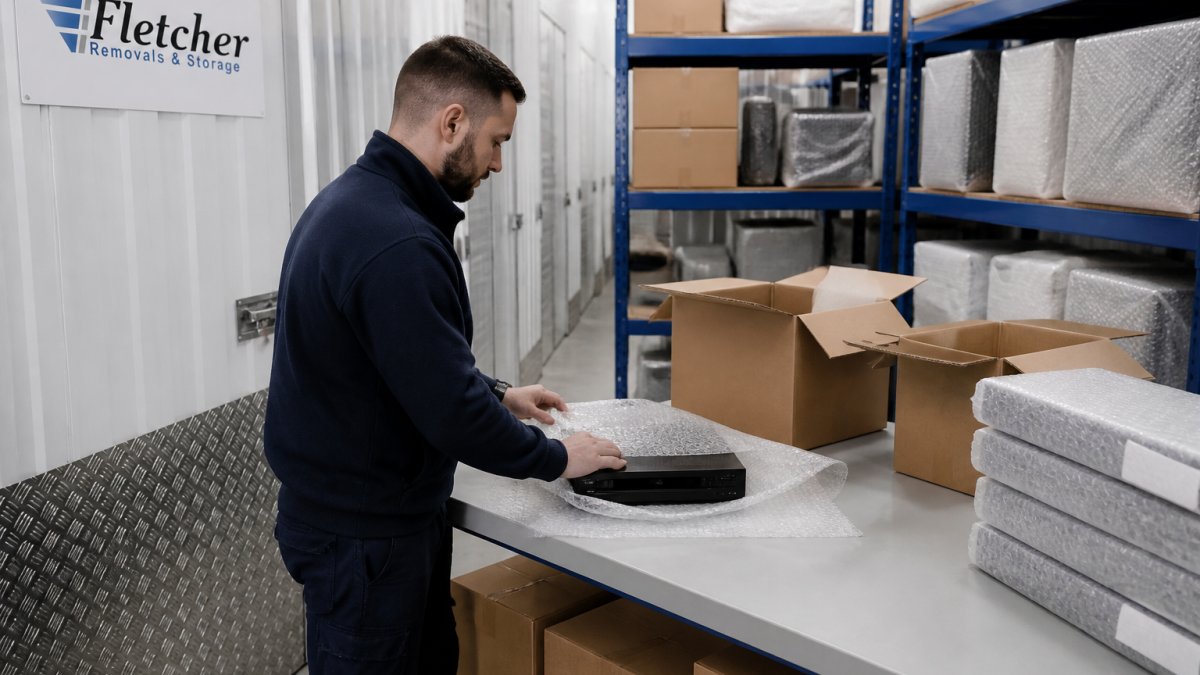
To pack antique furniture for moving safely, wrap each piece in acid-free tissue first, then cushion it with bubble wrap and secure everything with low-tack tape. Loose parts come off and go in their own labelled bag.
Start with the most fragile surfaces. Veneer, marquetry and gilded edges mark easily, so they get the tissue layer before anything else touches them.
Hardware is where most people slip up. Remove handles, knobs and escutcheons, then bag them and tape the bag to the piece itself. A bag in a box across the van is a bag you'll never see again.
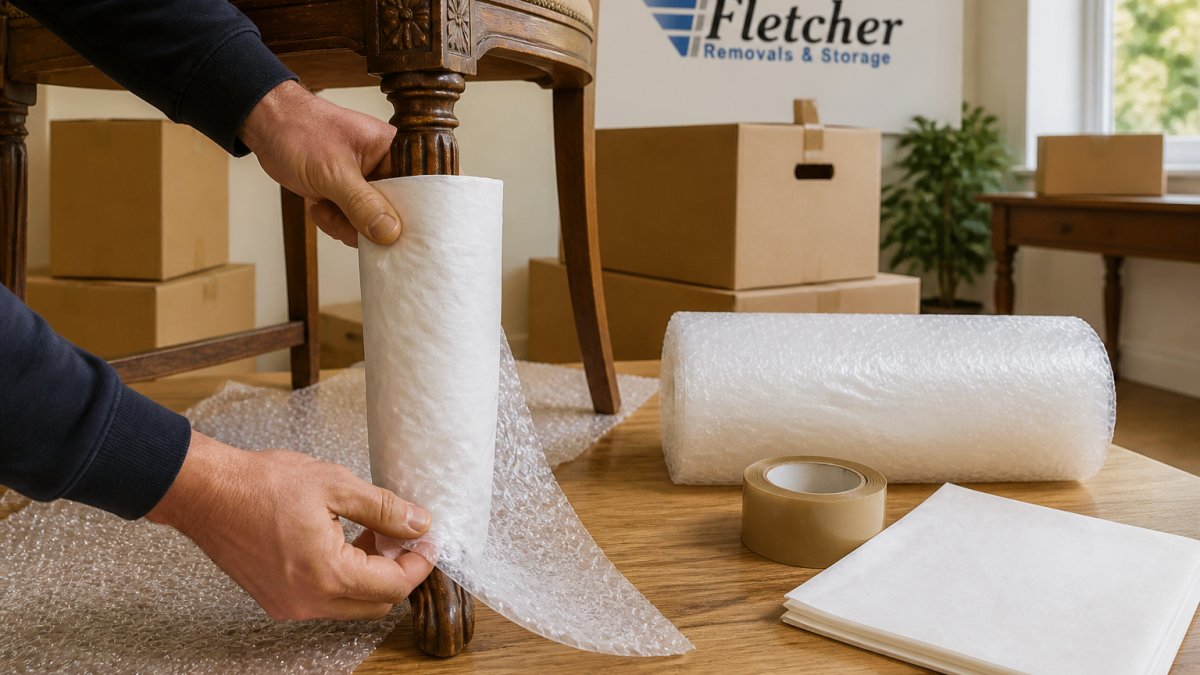
Wrapping and Cushioning Techniques
Cushioning is about layers, not thickness. One tight, even layer beats three loose ones every time.
- Wrap tissue flat against the surface, no wrinkles
- Add bubble wrap with bubbles facing inward
- Pad corners and feet with extra foam
- Tape only to itself, never to the wood
- Label every wrapped piece with its room and contents
Never tape directly onto a finished surface. Low-tack tape can lift French polish, and that repair costs more than the whole packing job.
How to Protect Antique Furniture When Moving
Protecting antique furniture when moving means controlling three things: impact, moisture and temperature. Nail the first one and the other two get much easier.
Blankets and pads absorb knocks. Breathable covers stop sweating. Padding between stacked items stops pieces rubbing against each other, which is the quiet cause of most transit damage.
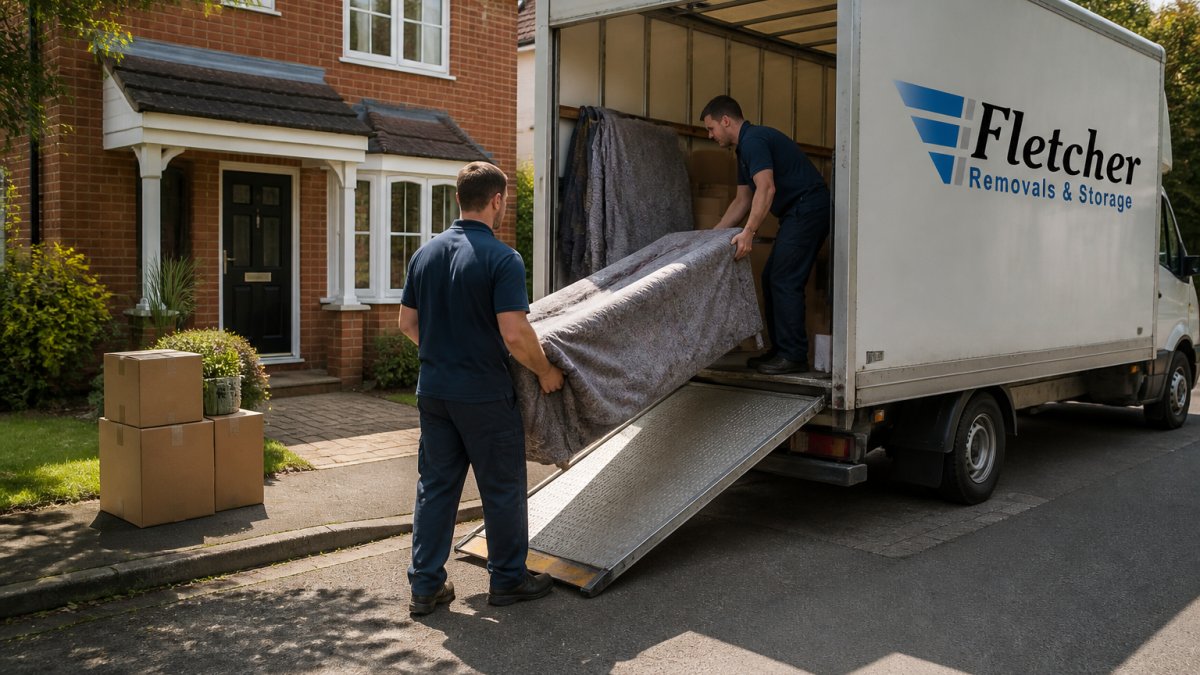
Load heavy pieces low and against the bulkhead. Light, tall items go on top. This is basic physics, but plenty of DIY moves ignore it.
Handling Veneers, Inlays and Marble
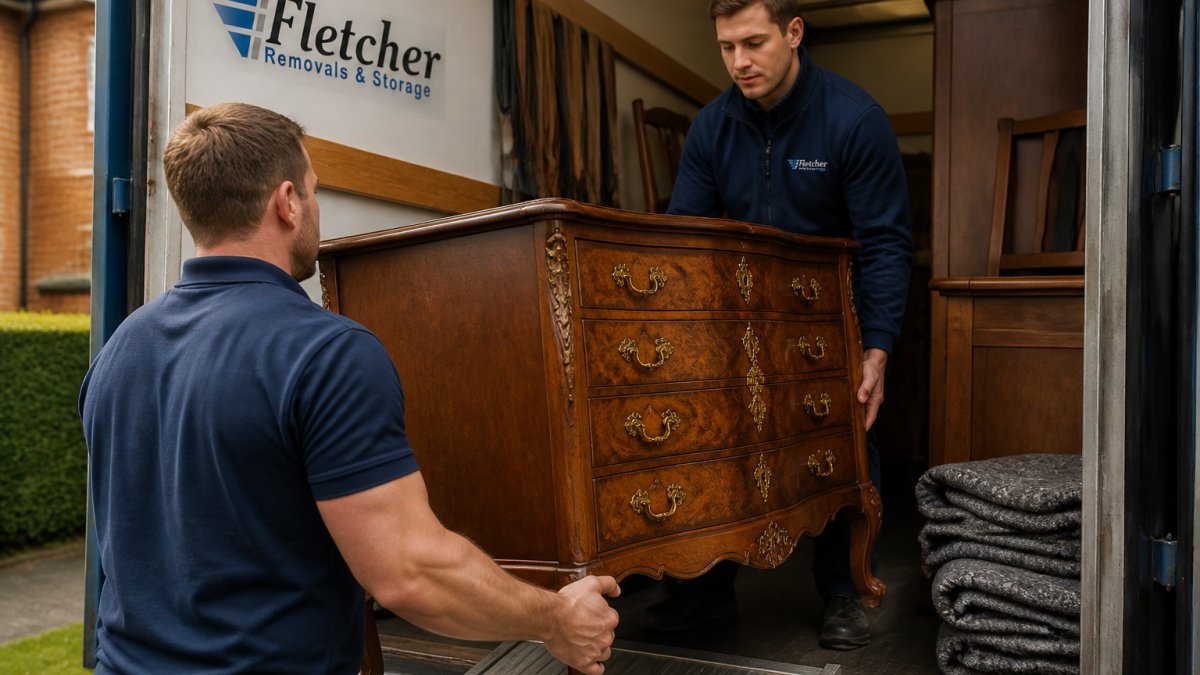
Veneer and inlay are thin layers bonded to a base. They lift when they flex, so never carry a veneered piece by its top edge alone. Support the base and keep the piece upright.
Marble tops come off. Always. A marble slab left on a sideboard during transit can crack the frame and the stone at once.
- Lift marble vertically, never slide it
- Store marble standing on its edge, not flat
- Keep inlays face-up and cushioned
- Avoid direct sun during loading
If a piece has loose veneer already, don't press it down. Tape a card over the area to hold it and let a restorer deal with it after the move.
Moving a Heavy Antique Wardrobe
Moving a heavy antique wardrobe is a four-person job in most cases, even when it looks manageable. Wardrobes are tall, top-heavy and full of glass, and that combination punishes shortcuts.
Empty it completely first. Remove shelves, rails and drawers. Then measure every doorway, stair turn and hallway on the route before anyone lifts anything.
Dismantling is often the safer call. Many period wardrobes come apart at the cornice and base, which drops the weight and the height in one go.
Dismantling and Reassembly
Label every fixing as you remove it. A sandwich bag and a marker cost pennies and save hours.
- Photograph the joints before you separate them
- Bag screws, bolts and dowels per panel
- Number panels in the order they come apart
- Keep the cornice and base separate
- Store fixings with the piece, not in a toolbox
Reassembly is the reverse, and it's easier with two people. Line up the joints by hand before you drive any fixing home. Forced joints split timber, and split timber on an antique is a restorer's bill, not a DIY fix.
Packing Antique Furniture for Storage
Packing antique furniture for storage needs more care than a van journey, because time works against you. Weeks in a damp unit do more harm than a day on the road.
Use breathable covers, not plastic. Keep pieces off a bare concrete floor with pallets or battens. Leave a gap between items so air can move.
Climate control matters more than most people realise. The Historic England advice on environmental conditions for collections notes that swings in humidity cause more damage than steady conditions, even slightly imperfect ones.
- Store upholstered items separately and raised
- Stand marble on edge, never flat
- Keep metal fixings dry to avoid rust marks
- Check stored items every few weeks
If you're between homes for a stretch, ask about flexible storage terms rather than signing into a long lock-in. Fletcher Removals and Storage offers on-site warehouse storage (container and self-storage) with flexible terms, so short gaps between properties are straightforward to cover.
Insurance and Valuation for Antique Furniture Moving
Insurance and valuation come before the move, not after. Standard removals cover often works on a per-item limit, and a single antique can blow past that limit on its own.
Get a professional valuation for anything high-value. An auctioneer or a qualified valuer can put a figure in writing that an insurer will accept. Keep that document with your inventory.
Check what cover you actually have. Goods in Transit and Public Liability Insurance protect different things, and you want to know which applies to your pieces.
- Photograph condition before loading
- Keep receipts and valuation letters together
- Declare high-value items in writing
- Ask what the per-item limit is
- Confirm cover before the van arrives
When to Call Professional Movers for Antique Furniture
Call professional movers when a piece is worth more than your confidence in moving it. That line sits in a different place for everyone, but a few situations push you over it fast.
- The piece is a family heirloom or has a valuation
- It's a wardrobe, piano or anything tall and top-heavy
- It has glass, marble or delicate inlay
- Your route has tight turns or narrow stairs
- You're short on time or helping hands
A trained crew brings the right materials, the lifting technique and the insurance to back it up. Fletcher Removals and Storage has been handling domestic and commercial moves since 2013, with trained, uniformed professional staff and Goods in Transit and Public Liability Insurance in place as standard.
The real difference between a DIY move and a professional one comes down to risk. You're not paying for muscle. You're paying for the piece to arrive in the same condition it left.
Common Mistakes to Avoid
The most common mistakes in moving antique furniture are all about speed. Rushing the wrap, skipping the valuation and taping straight onto a finish cause most of the damage we see.
- Using plastic wrap on timber, which traps moisture
- Taping directly onto polished or painted surfaces
- Leaving marble tops attached to their bases
- Lifting veneered pieces by the top edge
- Skipping the valuation and relying on guesswork
- Packing heavy items on top of light ones
Each one is cheap to avoid and expensive to fix. A roll of acid-free tissue costs far less than a French polish repair.
One more thing most guides miss: don't clean or polish a piece right before the move. Fresh polish stays soft for days, and soft polish marks under a blanket. Clean it after it's in the new place.
Conclusion
Moving antiques is a test of patience more than strength, and the pieces that arrive intact are the ones packed slowly and insured properly. Get the materials right, wrap in layers, dismantle the heavy items and put a valuation in writing before the van arrives.
If you'd rather not carry that risk yourself, Fletcher Removals and Storage can take it on. Our team offers a full packing service, professional dismantling and reassembly, and secure on-site warehouse storage (container and self-storage) with flexible terms, all backed by Goods in Transit and Public Liability Insurance and transparent pricing with no hidden fees.
Get started with Fletcher Removals and Storage and move your antiques with the care they've earned.
Frequently Asked Questions
How do you protect antique furniture when moving house?
Protecting antique furniture during a move starts with using the right materials: acid-free tissue paper, bubble wrap, and soft blankets. Remove drawers and wrap them separately, cushion corners with foam, and avoid plastic wrap directly on wood. For high-value pieces, consider professional packing services that specialise in antique furniture moving and can provide custom crates.
Should you dismantle antique furniture before moving it?
Only dismantle antique furniture if it was designed to be taken apart, such as beds or some wardrobes. Never force joints or remove original screws on antique pieces, as this can cause irreversible damage. If unsure, consult a professional mover or an antiques conservator. For heavy wardrobes, removing doors and drawers can reduce weight and prevent strain on the frame.
What is the safest way to wrap antique wood furniture?
The safest method is to wrap antique wood furniture in acid-free tissue paper first, then add a layer of bubble wrap or soft blankets. Avoid using newspaper directly on wood, as ink can transfer. Secure wrapping with low-tack tape, never masking tape on the wood itself. For carved or fragile areas, use foam padding and pack into a custom crate if possible.
Can bubble wrap damage antique furniture?
Bubble wrap itself does not damage antique furniture, but using it incorrectly can. If bubble wrap is placed directly against a fragile finish, it can leave marks or trap moisture. Always use a barrier layer of acid-free tissue paper between the bubble wrap and the wood. Also, avoid wrapping items too tightly, as this can put pressure on delicate joints or veneers.