 how-to
How to Pack Fragile Items for International Shipping
Table of Contents
- What You'll Need to Pack Fragile Items for International Shipping
- Best Packing Materials for International Shipping
- Step-by-Step: How to Pack Fragile Items for International Shipping
- Double Boxing Fragile Items: When One Box Isn't Enough
- How to Label Fragile Packages for Customs
- Common Packing Mistakes That Lead to Breakages
- Conclusion: Packing Fragile Items with Confidence
- Frequently Asked Questions
Last Updated: October 4, 2026
What You'll Need to Pack Fragile Items for International Shipping
Learning how to pack fragile items for international shipping starts with the right kit. Parcels cross several sorting hubs and travel by road, sea or air before they reach the other side, so your packing has to survive far more handling than a domestic move. At Fletcher Removals and Storage, we have packed and stored fragile belongings, and the same principles apply whether a box is crossing Coventry or crossing an ocean.
Gather these materials before you start:
- Double-walled cardboard boxes in two sizes, one slightly smaller than the other
- Bubble wrap, at least two layers' worth per item
- Acid-free tissue paper for delicate surfaces
- Packing peanuts or scrunched kraft paper for void fill
- Heavy-duty packing tape and a tape dispenser
- Fragile labels and a waterproof marker
- Zip-seal bags for screws, cables and small parts
A common mistake is buying one roll of bubble wrap and hoping for the best. International parcels need more cushioning than most people expect, so buy double what you think you need.
Best Packing Materials for International Shipping
The best packing materials for international shipping are the ones that absorb shock and hold their shape. Corrugated cardboard, bubble wrap, foam and double-walled boxes do the heavy lifting. Cheap newspaper alone will not protect glass or ceramics over long distances.
Materials Worth the Investment vs Where to Save
Spend on the materials that sit closest to your item. Bubble wrap, foam wrap and double-walled boxes protect against impact. Save on the outer layer: any sturdy, clean box works, provided it is rigid and undamaged.
| Material | Worth Paying For? | Best For |
|---|---|---|
| Double-walled boxes | Yes | Anything glass, ceramic or electronic |
| Bubble wrap | Yes | Wrapping individual items |
| Foam wrap | Yes | Electronics and sharp edges |
| Packing peanuts | Yes | Filling gaps between items |
| Newspaper | No | Only as outer void fill |
A quick note on boxes: reused supermarket cartons crush easily under stacked freight. Spend the extra on proper double-walled boxes, and your items arrive intact far more often.
Step-by-Step: How to Pack Fragile Items for International Shipping
Pack fragile items by wrapping each one individually, cushioning all sides, and leaving no empty space inside the box. Follow these steps every time:
- Choose a box at least 5 cm larger than the item on every side.
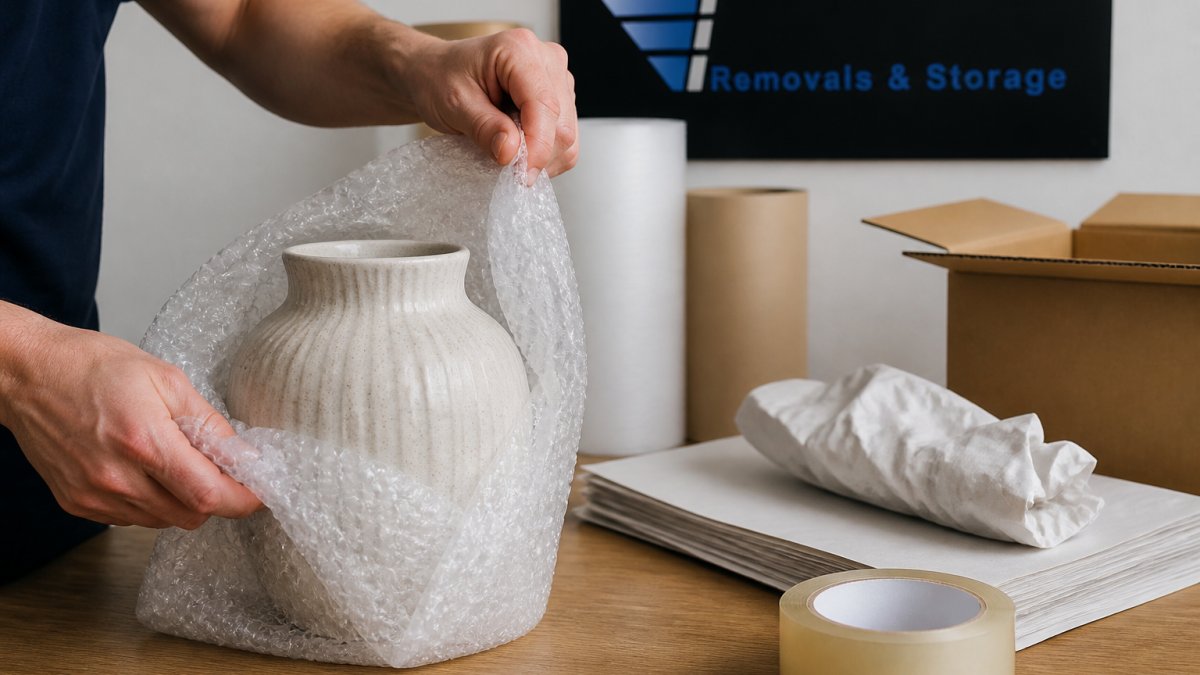
- Wrap the item in two layers of bubble wrap, taping the wrap in place.
- Fill the bottom of the box with 5 cm of cushioning.
- Place the wrapped item in the centre, away from the walls.
- Fill every gap with packing peanuts or scrunched paper.
- Add 5 cm of cushioning on top before closing the lid.
- Seal all seams with heavy-duty tape, then shake the box gently. If anything moves, add more fill.
Packing Glassware, Ceramics and Porcelain
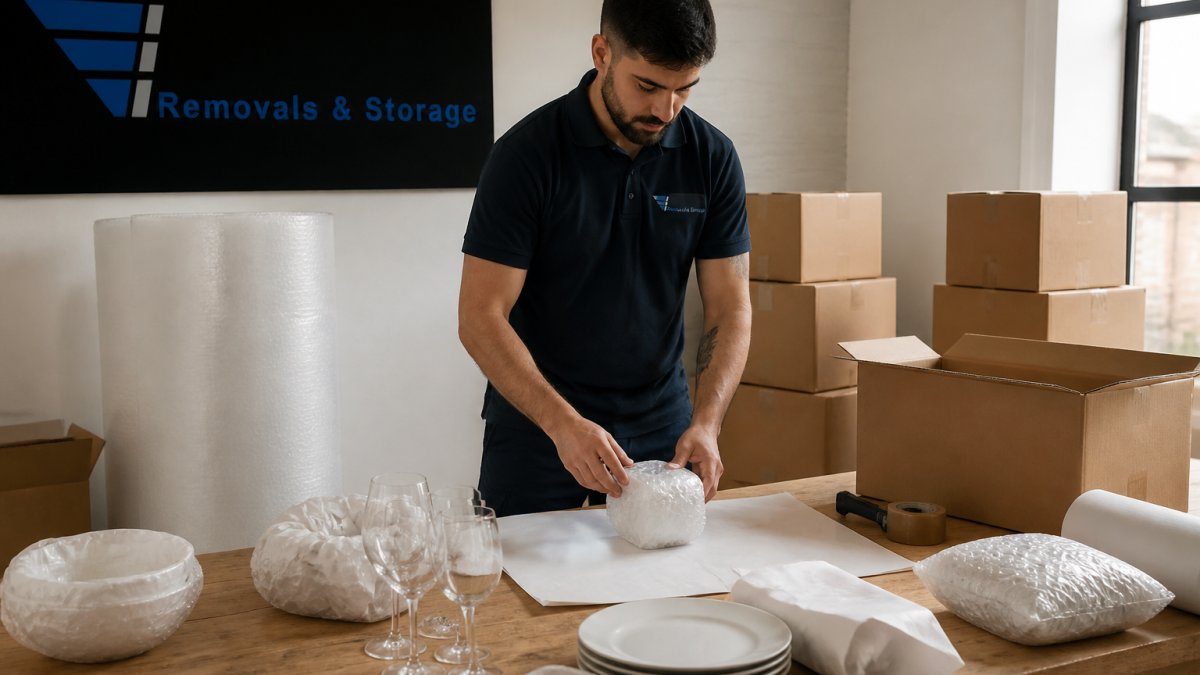
Wrap each piece separately, even items from the same set. Two glasses touching inside a box will chip each other. Wrap stems and handles with extra bubble wrap, then stand plates and glasses on edge rather than flat, which spreads impact better.
Packing Electronics and Small Appliances
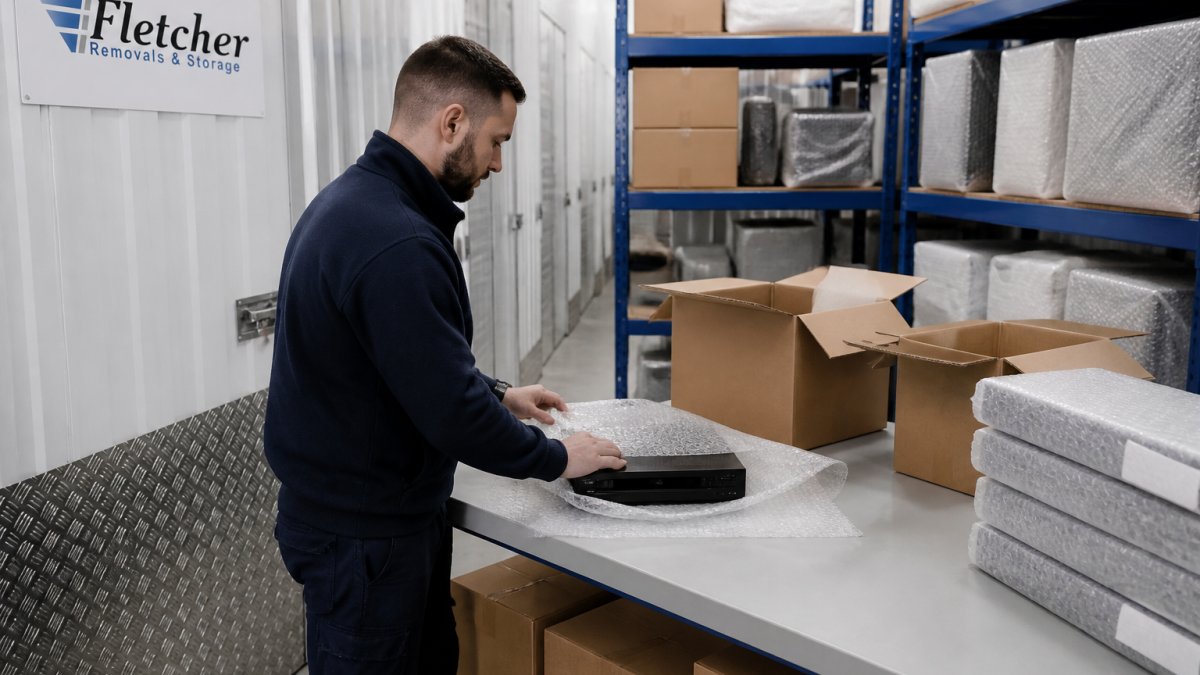
Remove batteries where possible and bag small parts and cables separately. Wrap screens and glass panels in foam first, then bubble wrap. Original boxes are ideal if you still have them, but a double-walled box with firm cushioning works just as well.
Double Boxing Fragile Items: When One Box Isn't Enough
Double boxing fragile items means placing a wrapped, sealed box inside a larger box with 5-8 cm of cushioning between the two. Use it for anything high-value, irreplaceable or very delicate.
The inner box holds the item snugly. The outer box absorbs the knocks. Together they create a buffer that a single box cannot match. For antiques, artwork or family heirlooms, this is a highly recommended standard.
One honest limitation: double boxing adds weight and size, which can push up shipping costs. For low-value, sturdy items, a single well-cushioned box is usually enough.
How to Label Fragile Packages for Customs
Label every side of the box with "FRAGILE" in large, clear letters, plus "THIS WAY UP" arrows if the item has a correct orientation. Customs forms must state the contents accurately and honestly, including the material and value of each item.
Keep the customs declaration separate from your fragile markings. Customs labels carry the sender and recipient details, a contents description and a value, while fragile markings tell handlers how to treat the box. Write both in waterproof ink, and add a second copy of the address inside the box in case the outer label is lost.
Common Packing Mistakes That Lead to Breakages
Most breakages come down to a handful of repeat mistakes. Watch for these:
- Leaving empty space inside the box, which lets items shift and collide
- Wrapping items in a single thin layer of bubble wrap
- Using flimsy, single-wall boxes for heavy or glass items
- Placing heavy items on top of lighter ones
- Skipping fragile labels because the box "looks sturdy enough"
- Sealing only the top seam and leaving the base untaped
Each one seems small on its own. Together they are why parcels arrive cracked, chipped or shattered.
Conclusion: Packing Fragile Items with Confidence
Packing fragile items well takes time, materials and a bit of patience. If that sounds like more than you want to take on, that is exactly the work we handle every day. Fletcher Removals and Storage offers professional packing, secure onsite storage and careful transport for domestic and commercial clients. Our trained, uniformed team is covered by Goods in Transit and Public Liability Insurance, so your valuables travel protected.
Frequently Asked Questions
What is the best way to pack fragile items for long-distance shipping?
Wrap each item individually in bubble wrap or packing paper, then place it in a sturdy box with at least 5cm of cushioning on all sides. Fill any gaps so nothing shifts during transit. For high-value or very delicate pieces, use double boxing: place the wrapped item in a smaller box, cushion it, then put that box inside a larger one with more padding between the two. Label the outer box clearly and choose a courier that handles fragile goods regularly.
How do I pack glassware for international transit?
Wrap each glass separately in tissue paper, then bubble wrap, taping the wrap in place. Stand glasses upright rather than on their sides, and use cardboard dividers or rolled newspaper between them. Line the box base with 5cm of bubble wrap or foam, pack items snugly, then fill remaining space with scrunched paper. Seal with strong tape and mark the box as fragile on every side before shipping.
Does insurance cover fragile items if they break during international shipping?
Coverage depends on the carrier and the level of protection purchased. Most couriers offer limited liability as standard, with additional cover available for declared values. Read the terms carefully, as many policies require proof that items were packed to a professional standard. Photograph each item before packing and keep receipts. If you use a professional removals company, check whether Goods in Transit Insurance is included and what the claims process involves.
How do I label fragile packages for international couriers?
Write 'FRAGILE' in large capital letters on at least two sides of the box, along with 'THIS WAY UP' arrows where relevant. Use a waterproof marker so the writing survives rain and handling. Attach a customs declaration listing contents and values accurately, and include a second copy inside the box. Avoid writing 'glass' on the outside, as this can attract unnecessary attention from handlers.
Packing for an international move is stressful enough without worrying about breakages. Fletcher Removals and Storage takes that weight off your shoulders with a full packing service, secure container and self-storage, and transparent pricing with no hidden fees. Get started with Fletcher Removals and Storage and send your fragile items on their way with confidence.