 how-to
How to Find Insured Removal Companies: 2026 Guide
Table of Contents
- What to Look for in an Insured Removal Company
- BAR Accredited Removal Companies: Why It Matters
- What Is Goods in Transit Insurance?
- Your Moving House Insurance Checklist
- Step-by-Step: How to Find and Vet Insured Removal Companies
- Common Mistakes to Avoid
- Frequently Asked Questions
Last Updated: September 11, 2026
What to Look for in an Insured Removal Company
The single most important thing to check when choosing a removal firm is its insurance cover, specifically Goods in Transit and Public Liability protection. This guide from Fletcher Removals and Storage explains how to find insured removal companies you can trust with your possessions.
Goods in Transit insurance protects your belongings while they are being transported between properties. Without it, if your furniture is damaged or lost in transit, you have limited recourse.
Public Liability insurance covers injury or damage caused to third parties or property during the move, for example if a removal worker damages a doorway or a neighbour's fence.
A common mistake is assuming that all removal firms carry both types of cover. Many do not, and the cheapest quote often reflects the absence of proper protection.
UK government guidance on hiring a removal company
BAR Accredited Removal Companies: Why It Matters
BAR accredited removal companies have been independently assessed against industry standards for professionalism, insurance, and service quality. BAR stands for the British Association of Removers, the trade body that sets these benchmarks.
Membership is voluntary, which is precisely what makes it useful. A firm that has gone through BAR's vetting process has demonstrated proof of insurance, trained staff, and a commitment to resolving disputes fairly.
In practice, this means less risk for you. If something goes wrong, BAR members must follow a formal complaints procedure. Non-accredited firms offer no such guarantee.
When shortlisting, treat BAR accreditation as a strong signal rather than a formality. It narrows the field quickly.
What Is Goods in Transit Insurance?
Goods in Transit insurance is a policy that covers your possessions against loss or damage while they are being loaded, transported, and unloaded by a removal company. It is distinct from your own home contents insurance, which typically does not cover items in a removal van.
Here is the part most people get wrong: the level of cover varies significantly between firms. Some policies cover the full replacement value of your goods. Others cap liability per item or per cubic metre, leaving you underinsured on high-value pieces.
Ask each company for the specific cover limit per item and the total policy limit. If the numbers look vague, that is a red flag.
Financial Conduct Authority guidance on insurance products
Your Moving House Insurance Checklist
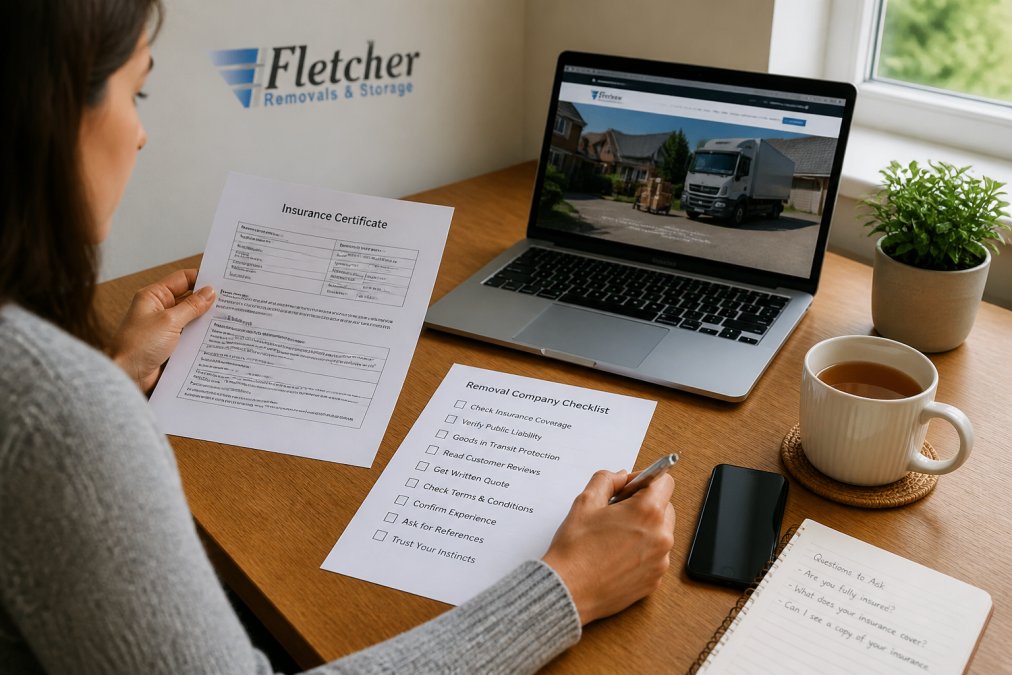
A moving house insurance checklist helps you confirm that both the removal firm and your own policy will protect you on moving day. Use the following points before you commit:
- Confirm the removal company holds current Goods in Transit insurance
- Confirm the removal company holds Public Liability insurance
- Ask for the per-item and total policy limits in writing
- Check whether packing services are covered or excluded
- Review your own contents insurance for items in transit
- Note any high-value items that need separate declared cover
- Keep copies of all insurance certificates and policy documents
Most home contents policies exclude items being moved by a professional removal firm (abi.org.uk). That gap is exactly why the firm's own cover matters.
Step-by-Step: How to Find and Vet Insured Removal Companies
Finding a properly insured removal firm comes down to four steps: research, quote, verify, and book. Skipping the verification stage is where most people run into trouble.
Step 1: Research and Shortlist
Start with the British Association of Removers directory to find accredited firms in your area. Cross-reference with local reviews and ask friends or colleagues for recommendations.
Aim for a shortlist of three to four companies. Fewer than three limits your ability to compare, and more than four becomes unwieldy.
Step 2: Request Quotes and Ask About Insurance
Contact each firm and request a written quote. During that conversation, ask directly about their insurance cover.
The questions to ask:
- What is your Goods in Transit cover limit per item?
- Do you hold Public Liability insurance, and what is the limit?
- Are packing and unpacking included in the cover?
- What is the process if something is damaged?
Vague answers here are a warning sign. A reputable firm will answer these without hesitation.
Step 3: Verify Insurance and Accreditation
Ask for a copy of the insurance certificate and check the policy is current. Verify BAR membership directly with the association rather than relying on a logo on a website.
This step takes minutes and eliminates the firms that only claim to be insured.
Step 4: Compare and Book
Compare quotes on more than price. Factor in the level of insurance cover, the services included, and the firm's track record.
| What to Compare | Why It Matters | Red Flag |
|---|---|---|
| Goods in Transit limit | Determines payout if items are damaged | Vague or capped per item |
| Public Liability cover | Protects against property damage | No certificate provided |
| BAR accreditation | Confirms industry standards | Claims membership but cannot verify |
| Packing included | Affects total cost and cover | Unclear what is covered |
| Written quote | Prevents hidden fees | Verbal estimates only |
Once you have verified insurance and accreditation, book with confidence.
Common Mistakes to Avoid
Choosing on price alone is the most frequent error. A quote that undercuts the rest by a wide margin usually reflects missing insurance or untrained staff.
Another mistake is failing to ask for insurance documents before the move. Verbal assurances mean nothing if a claim arises.
Finally, many people assume their own contents insurance covers the move. In most cases it does not, which leaves a gap that only the removal firm's policy can fill.
At Fletcher Removals and Storage, we hold both Goods in Transit and Public Liability Insurance and have served domestic and commercial clients since 2013. Our transparent pricing means no hidden fees, and our trained, uniformed staff handle packing, dismantling, and secure storage with care.
Finding a removal firm that is genuinely insured takes a little diligence, but the verification process is straightforward once you know what to ask for. If you would rather work with a team that has held Goods in Transit and Public Liability Insurance since 2013, Fletcher Removals and Storage offers transparent pricing, a personalised approach to every enquiry, and secure onsite warehouse storage for flexible timeframes. Get started with Fletcher Removals and Storage and move with the confidence that your belongings are properly protected.
Frequently Asked Questions
What insurance should a removal company have?
A removal company should carry Goods in Transit insurance to cover your belongings while they are being transported, and Public Liability insurance to cover damage to property or injury during the move. Goods in Transit typically covers loss or damage up to a specified limit, while Public Liability protects against claims if the company damages your home or injures someone. Always ask for proof of both policies before booking.
How do I check if a removal company is insured?
Ask the company for a copy of their insurance certificate and check that it is current. You can also verify their membership with a trade body such as BAR, which requires members to hold valid insurance. Don't rely on verbal assurances; request written confirmation. If they hesitate or cannot provide documents, treat that as a red flag and look elsewhere.
Does my home insurance cover goods in transit during a move?
Most standard home insurance policies do not cover your belongings while they are in transit. Some may offer limited cover, but it's often insufficient for a full house move. Check your policy documents or call your insurer to confirm. If you're not covered, ensure your removal company has Goods in Transit insurance or consider taking out separate removal insurance.
What is the difference between goods in transit and public liability insurance?
Goods in Transit insurance covers your possessions while they are being loaded, transported, and unloaded by the removal company. Public Liability insurance covers damage to third-party property or injury to people during the move, such as if a removal worker accidentally damages your neighbour's wall. Both are important, but they protect against different risks. Always confirm a company holds both.