 how-to
How to Clean Antique Furniture After a Move?
Last Updated: 26 October 2026
Quick Summary
To clean antique furniture after a move, start with a soft, dry cloth and a natural-bristle brush to remove dust gently, moving with the grain. Only use a barely damp cloth on hidden test areas first, since old wax, oil and shellac finishes can be damaged by water or commercial polishes.
- Dust first, using a soft dry cloth and brush, because grit can scratch old finishes.
- Avoid commercial furniture polish, which can build up and cloud antique finishes.
- Test any damp cleaning on a hidden area, such as the underside of a table, before wiping the rest.
- Use only a barely damp cloth and dry each section straight away to avoid water staining.
- Identify the finish first, since wax, oil and varnish each need different cleaning care.
Table of Contents
- Why Antique Furniture Needs Different Care After a Move
- What You Need Before You Start Cleaning
- How to Remove Dust From Antique Furniture Safely
- How to Clean Antique Furniture Without Damaging the Finish
- Identifying Wax, Oil and Varnish Finishes
- Cleaning Antique Furniture After Storage
- How to Clean Antique Upholstery
- Common Mistakes to Avoid
- Booking Your Move With Fletcher Removals and Storage
- Frequently Asked Questions
Why Antique Furniture Needs Different Care After a Move
Antique furniture can take a real knock on moving day. Bumps, temperature swings and time spent in a van or storage unit all put stress on old wood, glue joints and finishes. Knowing how to clean antique furniture after a move helps you spot problems early and protect pieces that may be decades old.
Clean carefully and gently. Old finishes are often thinner and more fragile than modern ones, so harsh cleaning can do more harm than the dust itself.
A useful rule is to work slowly and test first. Start with the least aggressive method and only move on if it does not work.
What You Need Before You Start Cleaning
Gather your supplies before you touch the furniture. Having the right tools on hand stops you from reaching for a household spray that might damage the finish.
You will need:
- A soft, dry microfibre or cotton cloth
- A soft natural-bristle brush or clean paintbrush
- A cotton bud for tight corners and carvings
- A small bowl of lukewarm water and a little mild soap, only if needed
- A second dry cloth for buffing
Avoid:
- Commercial furniture polish, which can build up and cloud old finishes
- Abrasive pads or scouring powder
- Silicone-based sprays
Work in a well-lit room, and move the piece away from walls if you can reach all sides. Take photos of any existing marks before you start, so you can tell later whether something has changed.
How to Remove Dust From Antique Furniture Safely
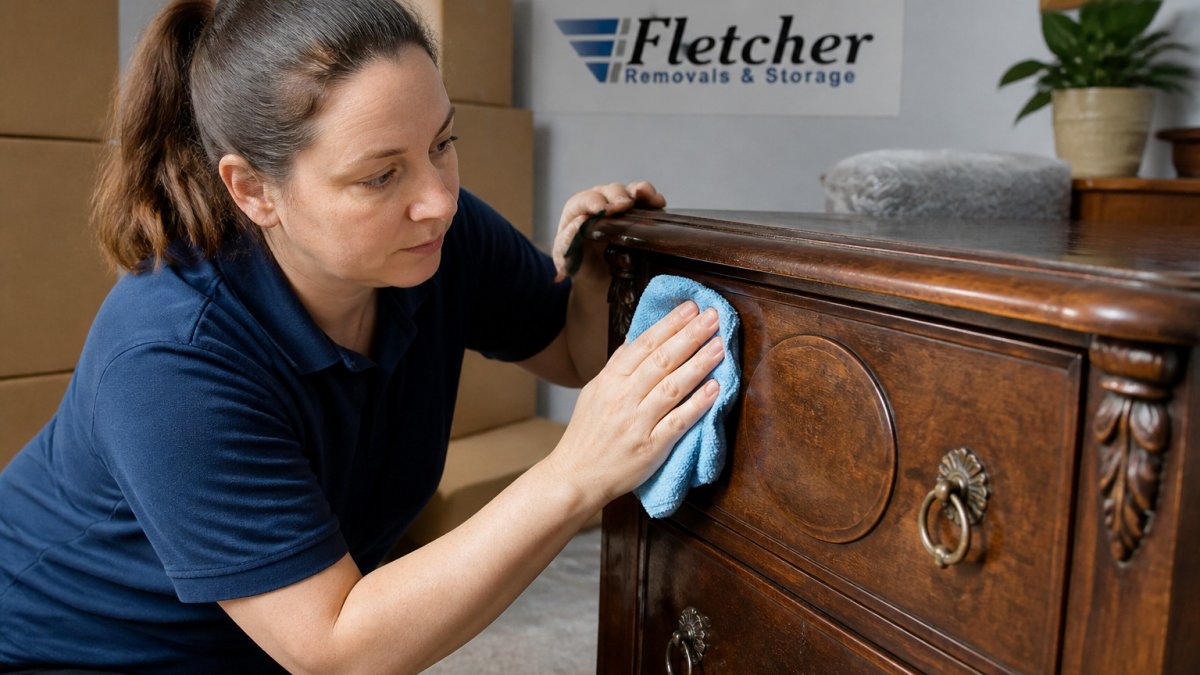
Dust removal is the safest first step. Dust is abrasive, so leaving it on can scratch the surface once you start wiping. Removing it gently is often enough to restore a piece's appearance.
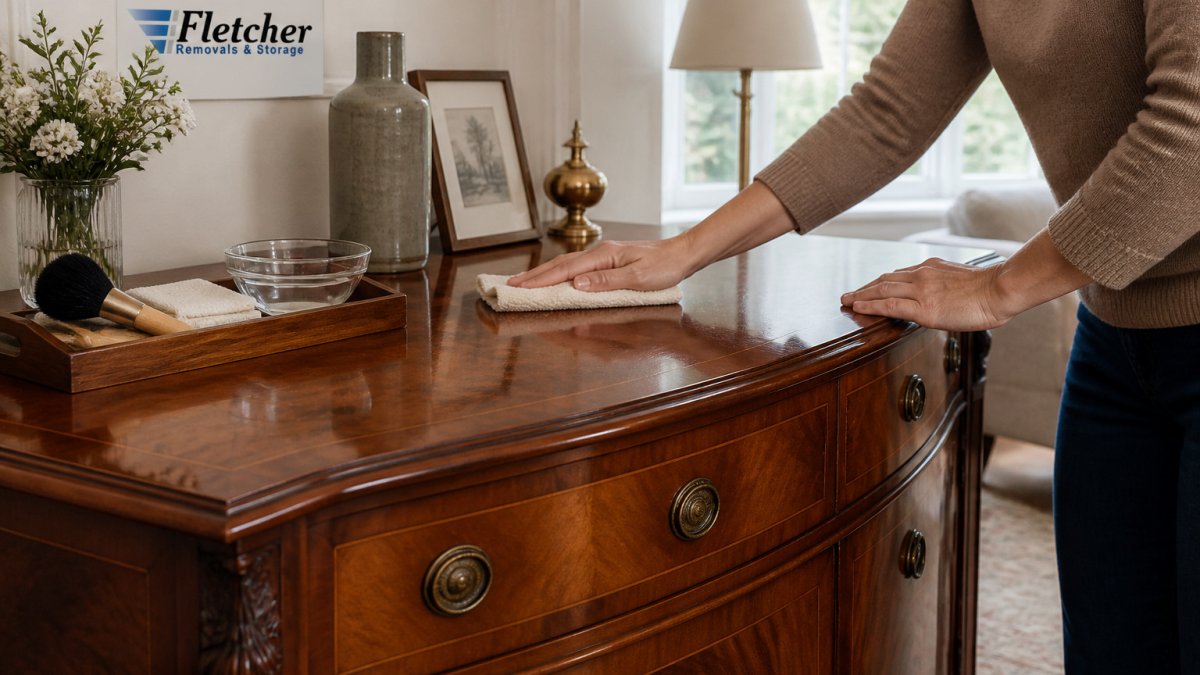
Follow these steps:
- Dust with a soft, dry cloth, moving in the direction of the grain.
- Use the soft brush to lift dust from carvings, mouldings and drawer edges.
- Use a cotton bud for tight spots and joints.
- Shake or rinse the cloth often so you are not simply moving dust around.
Keep pressure light. If the cloth picks up a lot of grime, stop and check whether the finish is lifting before you continue. Dust once a week or so after the move to keep the surface in good shape.
The steps below summarise the safe dusting process described above, with timing guidance for keeping the surface in good shape.
| Step | What to do | Time or frequency |
|---|---|---|
| 1 | Dust with a soft, dry cloth, moving with the grain | Once a week after the move |
| 2 | Use a soft brush for carvings, mouldings and drawer edges | As needed |
| 3 | Use a cotton bud for tight spots and joints | As needed |
| 4 | Shake or rinse the cloth often | Throughout |
| 5 | Keep pressure light and check for lifting finish | Throughout |
How to Clean Antique Furniture Without Damaging the Finish
Once the dust is gone, you can clean more deeply, but only if the finish allows it. Many antiques have shellac, French polish or oil finishes that react badly to water and strong cleaners.
Try this method:
- Dampen a cloth with a little lukewarm water and a drop of mild soap.
- Wring it out until it is barely damp.
- Wipe a small hidden area first, such as the underside of a table, and let it dry.
- If the test area looks fine, wipe the rest of the piece in small sections.
- Dry each section straight away with a clean cloth.
Water left sitting on old wood can cause staining and swelling, so never soak the surface. A common mistake is using too much liquid because it feels like it is working faster. In practice, a barely damp cloth does more good with less risk.
Identifying Wax, Oil and Varnish Finishes
Knowing the finish tells you how to clean it. The wrong method can cloud a surface that was otherwise fine.
- Wax finishes: Look dull or soft, and may feel slightly tacky. Clean with a dry cloth and avoid water.
- Oil finishes: Look warm and satin-like, and may absorb dust easily. Use a dry cloth and only a very light touch of cleaner if needed.
- Varnish or shellac: Look glossy and hard. These tolerate a barely damp cloth better than wax or oil, but still avoid soaking.
If you are unsure, start with dry dusting only. Most damage happens when people assume a finish is tougher than it is.
Cleaning Antique Furniture After Storage
Furniture kept in storage often picks up musty smells, dust and fine grime. It may also have been affected by humidity, so check for signs such as bloom on the wood or softened finishes before you clean.
Start by airing the piece in a dry room for a day or two if it smells damp. Then dust thoroughly, moving from the top down. Pay attention to drawer runners, feet and the underside of tabletops, where grime often collects.
If the smell remains, a light wipe with a barely damp cloth may help, followed by drying straight away. Avoid strong household cleaners to mask odours, as they can strip the finish and leave residue. If the problem is serious, ask a furniture restorer for advice rather than trying harsh fixes.
How to Clean Antique Upholstery
Upholstered antiques need separate care. Fabric can trap dust deep in its fibres and may be fragile after years of use or a move.
Follow these steps:
- Check the label or any old maker's marks for fabric information.
- Vacuum gently using a soft upholstery brush on the lowest suction setting.
- Test any spot cleaner on a hidden area first.
- Blot stains rather than rubbing, working from the outside in.
- Let the fabric air dry fully before using the piece.
Avoid soaking old fabric. Water can cause shrinkage, colour bleeding and damage to the stuffing or frame. For valuable or delicate upholstery, professional cleaning is often the safer option.
Common Mistakes to Avoid
A few errors cause most of the damage we see after a move:
- Using furniture polish on everything. Polish builds up over time and can dull old finishes.
- Scrubbing too hard. This can wear through the finish or leave scratches.
- Letting water sit on the surface. It can stain or swell the wood.
- Skipping the test patch. A small hidden test can save a large repair bill.
- Rushing the job. Slow, gentle cleaning protects both the finish and the piece's value.
If you are unsure about a particular piece, pause and seek advice before going further.
Booking Your Move With Fletcher Removals and Storage
Fletcher Removals and Storage offers a personalised approach to each enquiry, with trained, uniformed staff. Our team provides packing, dismantling and assembly, and we have Goods in Transit and Public Liability Insurance in place.
We also offer onsite warehouse storage, including container and self-storage options. Pricing depends on the quantity of goods, dates and delivery requirements, so contact us for a quote tailored to your move. You can find current details and send us an enquiry through our website using the Send button.
Frequently Asked Questions
How do you clean antique furniture without damaging it?
Start with a clean, soft, dry cloth and dust gently in the direction of the grain.
Can you use furniture polish on antiques?
It is generally best not to. Many modern furniture polishes contain silicone or waxes that can cloud older finishes, attract dirt and make later repairs harder. Specialist conservation advice tends to favour dry dusting and gentle buffing. Metal-polishing creams can also stain nearby wood and leave white deposits, so keep them away from antique surfaces. If a finish looks dull after a move, a conservator can advise on a suitable treatment for that specific piece.
How do you clean antique furniture after it has been in storage?
Allow the piece to acclimatise to room temperature before handling it, then remove loose dust with a soft dry cloth or a soft brush. Check drawers, cracks and carved areas for debris or insects, and look for signs of damp such as a musty smell, white bloom or lifting veneer. Do not apply moisture to damp-affected areas. If you find mould or significant damage, pause cleaning and seek advice from a conservator.
When should you ask a furniture conservator to clean an antique?
Ask a conservator if the piece is valuable, has a delicate or original finish, shows flaking veneer, loose joints, cracking, or has been damaged by water or damp during the move. Upholstered antiques with original fabric also warrant professional advice. A conservator can assess the finish and recommend a safe method, which is often far less costly than repairing damage caused by an unsuitable cleaner.