 how-to
Moving House Without Being There: 2026 Guide
Table of Contents
- How Moving House Without Being There Works
- Arranging a Virtual Home Survey for Removals
- Who Holds the Keys: The Key Handover Process for Remote House Moves
- Packing and Shipping When You Are Not in the Property
- Your Remote House Move Checklist
- Common Problems and How to Solve Them
- Conclusion
- Frequently Asked Questions
Last Updated: September 20, 2026
How Moving House Without Being There Works
Moving house without being there means handing the entire physical move to a professional team while you stay exactly where you are. You keep working, parenting, or recovering abroad while someone else packs, loads, transports, and stores everything. This guide from Fletcher Removals and Storage breaks down how a remote move actually runs, from the first video call to the moment keys change hands.
The process rests on three things: a virtual survey of your home, a trusted key handover, and a removal firm that treats your absence as normal rather than a problem. Get those right and distance stops mattering.
When a Remote Move Makes Sense
A remote move suits a specific set of situations. It rarely suits all of them at once.
- You have accepted a job in another part of the country and start before the sale completes
- You are working abroad and returning to a home you have not seen in months
- Your tenancy ends before your new one begins, so you need storage in between
- You are managing a move for a parent or relative who cannot organise it alone
- Your completion date keeps shifting and you cannot keep taking time off
The common thread is time pressure. When you cannot be in two places at once, a remote move stops being a luxury and starts being the only workable option.
The Limits of Moving Remotely
Remote moves are not magic. Some things genuinely need a person on site.
You cannot verify the condition of your new home in person. You cannot hand keys to a buyer face to face. And if your belongings need a decision mid-move, someone has to make it. A good removals team will flag anything unusual, but they will not choose which sofa goes to storage for you.
The honest answer: remote works well when your instructions are clear. It works badly when you are still deciding what to keep.
Arranging a Virtual Home Survey for Removals
A virtual home survey for removals is a video walkthrough of your property that lets a removal firm quote accurately without visiting. You walk room to room on a video call, the surveyor records what they see, and you get a written quote based on real volume rather than guesswork.
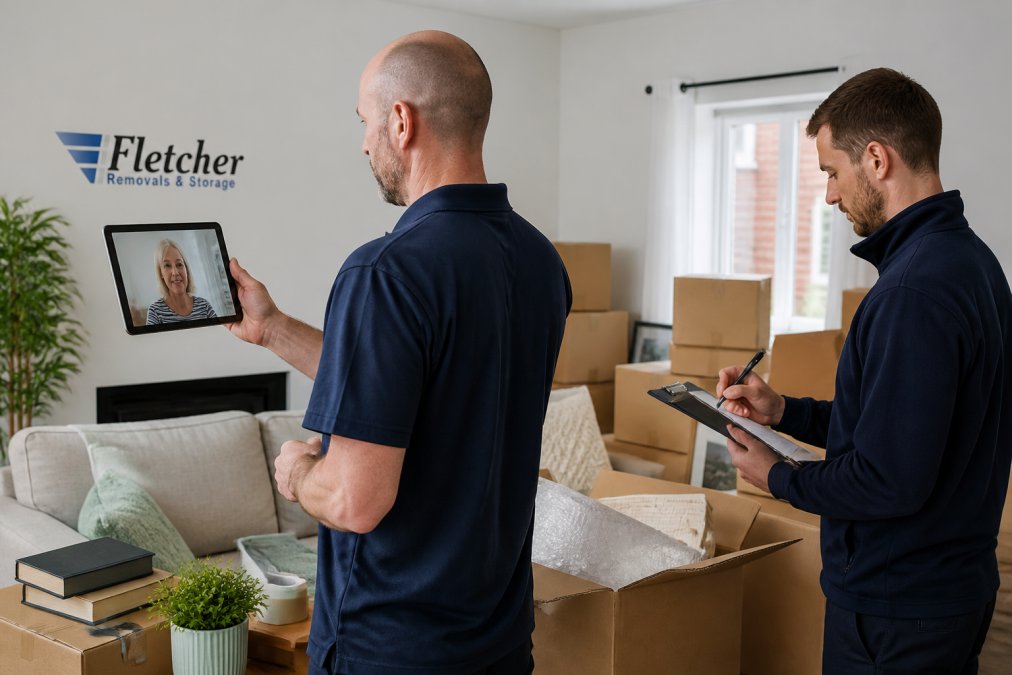
Most firms now offer this as standard. The survey usually takes 20 to 40 minutes and covers:
- Room-by-room furniture and box counts
- Access details: stairs, lifts, narrow doorways, parking
- Anything fragile, antique, or unusually heavy
- Whether you need packing, dismantling, or storage
Be thorough. A survey based on a quick phone sweep will produce a quote that changes on moving day, and that is where costs creep up.
Who Holds the Keys: The Key Handover Process for Remote House Moves
The key handover process for remote house moves decides who can access your property, when, and under what authority. Get this wrong and the whole move stalls on the day.
There are three common arrangements:
- Keys to the removals firm. You post or hand keys to the removal company in advance. They access the property, pack, and lock up. This is the most common route.
- Keys to a trusted person. A neighbour, family member, or letting agent holds keys and lets the crew in. Good when you want a familiar face on site.
- Keys via a solicitor or agent. Common when a sale is involved. The agent releases keys once contracts complete.
Whichever you choose, confirm it in writing. A removal firm needs clear authority before it touches anything.
Packing and Shipping When You Are Not in the Property
Packing is where remote moves are won or lost. You are trusting a team to wrap, box, and label everything correctly while you are nowhere near the property.
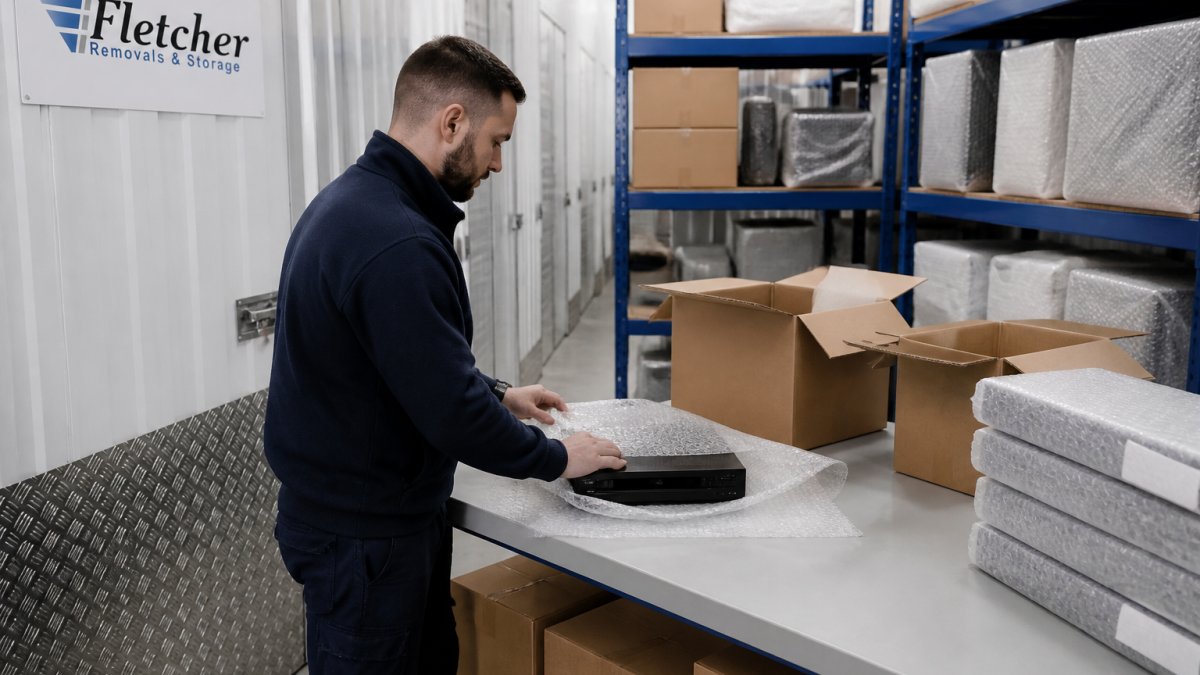
A full packing service removes the guesswork. Trained crews arrive with materials, wrap furniture, box room by room, and label everything by destination. You get an inventory rather than a pile of identical cardboard.
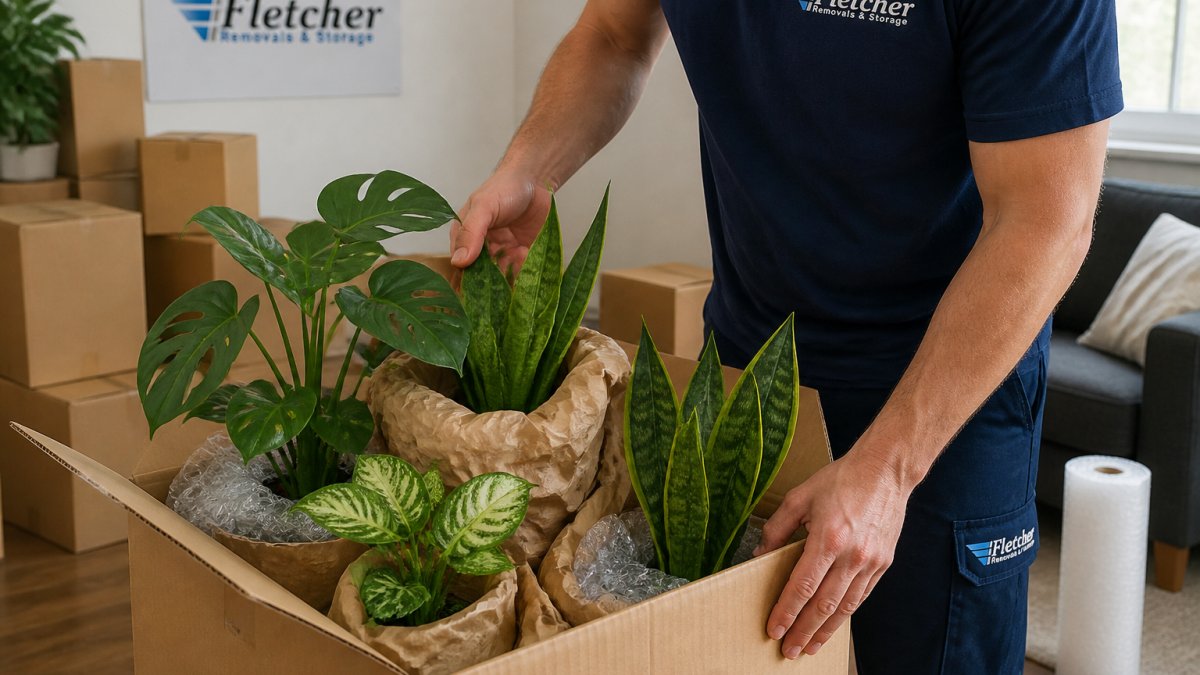
For fragile and antique items, say so at survey stage. Professional packers use specialist materials and techniques for glass, ceramics, artwork, and period furniture. Packing these yourself from a distance is not realistic.
If you need a gap between homes, storage covers it. Container storage keeps your goods sealed and separate. Self-storage gives you access if you need to retrieve something mid-move.
guidance on hiring a removal firm and your consumer rights
Your Remote House Move Checklist
A remote house move checklist keeps the move on track when you cannot see it happening. Work through it in order.
- Book the virtual survey and confirm the written quote
- Decide who holds keys and confirm it in writing
- Clear and label anything you are not taking
- Confirm packing, dismantling, and reassembly needs
- Arrange storage if there is a gap between homes
- Set up mail redirection with Royal Mail
- Notify utilities, council, and GP of the change of address
- Confirm insurance covers goods in transit and in storage
- Agree a single point of contact for moving day
- Get the inventory list before the crew leaves
Keep one person as your contact throughout. A single point of contact stops instructions getting lost between you, the crew, and the agent.
Common Problems and How to Solve Them
Problems happen on remote moves. Most are predictable.
| Problem | Why It Happens | The Fix |
|---|---|---|
| Quote changes on the day | Survey missed volume or access issues | Insist on a video survey, not a phone estimate |
| Keys do not turn up | No written handover record | Confirm holder and timing in writing |
| Fragile items arrive damaged | Packed by the owner, not the crew | Add professional packing to the booking |
| Completion date slips | Buyer or chain delays | Build a storage gap into the plan |
| No one can make decisions | Owner unreachable | Name a contact with authority |
The pattern is clear. Remote moves fail on communication, not logistics.
Conclusion
Moving house without being there is a coordination problem, not a distance problem. Nail the survey, the keys, and the packing, and the rest follows.
Fletcher Removals and Storage has handled full-service moves since 2013, with Goods in Transit and Public Liability Insurance and transparent pricing with no hidden fees. We cover packing, furniture dismantling and reassembly, and secure onsite warehouse storage in containers or self-storage. Get started with Fletcher Removals and Storage and move without ever standing in the doorway.
Frequently Asked Questions
Can I move house without being present at the property?
Yes, provided you authorise someone you trust to act on your behalf and agree the details in writing with your removal company. A named friend, relative or solicitor can oversee the collection, sign paperwork and confirm the property is empty. Give your removals firm written permission for that person to make decisions on the day, and share contact details for everyone involved so nothing stalls.
How do I coordinate a house move remotely?
Start with a virtual home survey for removals so the company can quote accurately from a video call. Agree dates and access arrangements in writing, nominate a keyholder, and set up a shared checklist covering packing, dismantling and storage. Confirm who signs on collection day, and ask for photo updates as each room is packed and loaded. A single point of contact at the removals firm keeps messages from getting lost.
What are the risks of not being present during a house removal?
The main risks are access problems, decisions made without your input, and items left behind because nobody checked the final room. Reduce them by nominating a trusted representative, labelling every box by room, and requesting a signed inventory. Confirm the company holds Goods in Transit and Public Liability Insurance before the move so you know how damage claims are handled.
Do I need to be at the property for the removal team to work?
No. Removal teams work regularly in empty or unattended properties when access is arranged in advance. Someone must unlock the door, confirm the property is clear at the end, and lock up afterwards, but that person does not have to be you. Many customers hand this role to a neighbour, family member or letting agent. Just make sure the crew has a contact number for whoever holds the keys.